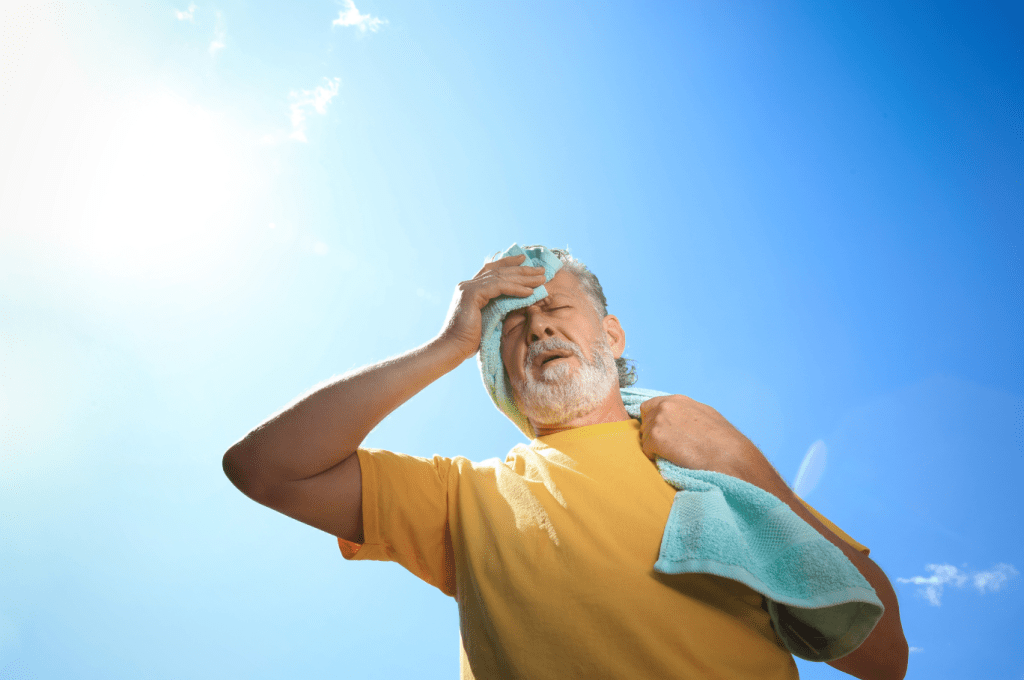
Phoenix set a record for this time in July, when the temperature touched 117 degrees. (Adobe Stock)
Listen to this story HERE
Jul 28, 2026
By Mark Moran
Longer, hotter summers in the Sonoran Desert have prompted the city of Phoenix to counter the heat with new programs designed to give people without shelter safe places to go during the extremes.
Phoenix recently opened its first 24-hour shelter for unhoused people and has used a cold-water immersion tank to treat severe heat stroke cases.
Christian Brock, an Air Force veteran and senior adviser to the advocacy group Elected Officials to Protect America, said federal assistance could help the city make more progress.
“Federal funding for these facilities and services could help save more lives during extreme heat events. But the actions by the current administration have hindered the climate crisis mitigation progress by putting people and their communities at higher risk,” Brock contended.
The Trump administration has sought to roll back aid for extreme heat resources like cooling centers. Federal lawmakers said they are trying to right-size the nation’s economy and root out alleged waste and fraud in social service programs.
Meanwhile, local leaders called on state policymakers to adopt more clean energy projects. But the Arizona Legislature recently debated a measure which would have required utilities to acquire 85% of their energy from fossil fuels.
While temperatures routinely reach triple digits in the Sonoran Desert, summers have been hotter for longer stretches than they were even a decade ago. As a result, experts said the extreme heat has become a public health emergency.
Rep. Aaron Marquez D-Phoenix, a Major in the US Army Reserve, said higher living costs mean people’s basic needs are going unaddressed.
“Arizonans have the right to a safe climate, to breathe clean air, to drink clean water, and to be protected from the dangers of extreme weather,” Marquez argued.
Municipal officials across the country have noted Washington’s effects in a variety of ways. They suggested cuts to safety net programs, expanded fossil fuel investments and the scaling back of environmental protections are putting populations in a tougher spot to escape the heat and afford to keep their homes cool.