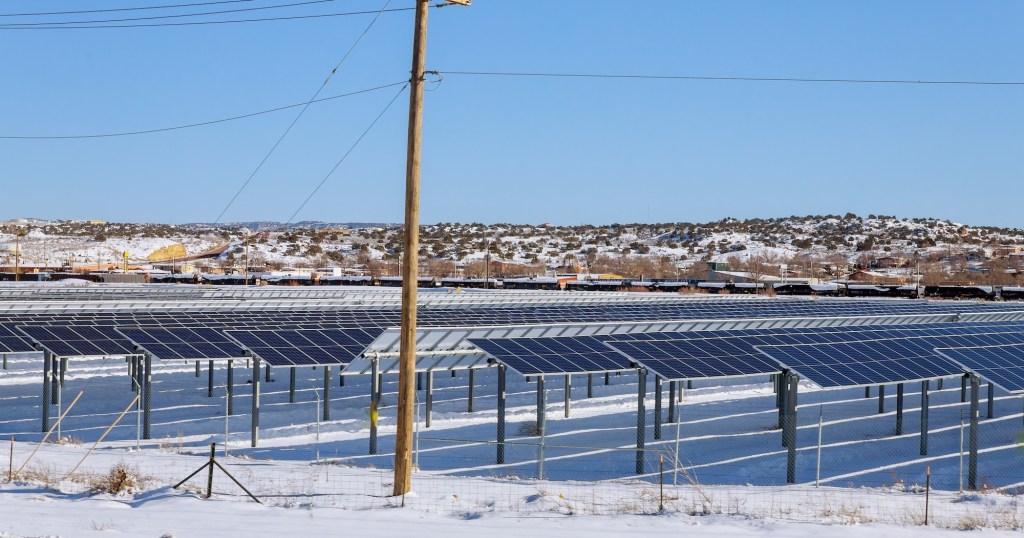
New Mexico has more than 110 utility-scale solar and photovoltaic power stations distributed across several counties. (Adobe Stock)
Oct 28, 2026
Listen to this story HERE
By Roz Brown
New Mexico is recognized as a major energy-producing state largely driven by fossil fuels but it is also showing rapid growth in renewable electricity.
Sen. Mimi Stewart, D-Albuquerque, president pro tempore of the Senate, has spent much of her 30 years as a legislator championing renewable energy and climate bills, including the 2019 Energy Transition Act. A fan of rooftop solar, she used state and federal tax credits to outfit her home and upgraded the panels when technology improved. When the Legislature convenes next year, she will be pressing for new credits to help even more people make the renewable energy transition.
“Ten percent of our rooftops have solar now in New Mexico. I think that’s a really good amount but I want to double and triple that. So we’re going to continue with trying to put in these tax credits again,” Stewart asserted.
New Mexico surpassed its 2030 target of 50% renewable electricity early, with renewables and storage helping power up to 62% of the state’s electricity during summer peaks this year.

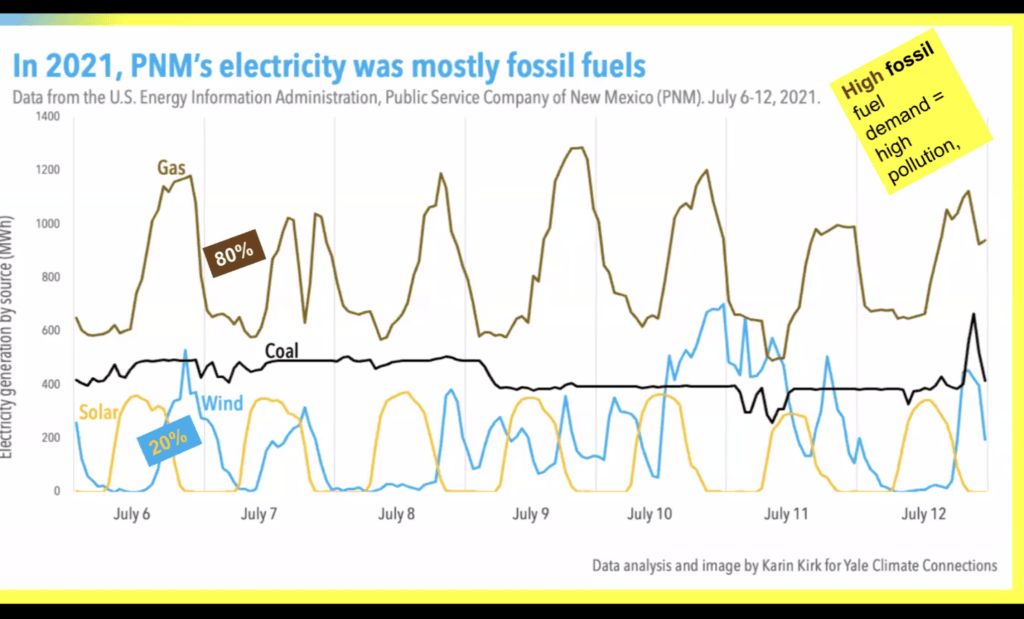
Wind is also a huge contributor to New Mexico’s energy grid, generating roughly 45% of the state’s electricity capacity following the commercial launch of the historic SunZia Wind Project.
New Mexico has also expanded its geothermal energy sector, with several bills carried by Rep. Patricia Roybal Caballero, D-Albuquerque. She said geothermal has the potential to create thousands of construction jobs and hundreds of permanent skilled operator roles and the state already hosts several national laboratories and university research centers, leading cutting-edge geothermal energy research, mapping and technology development.
“Geothermal generates reliable electricity from the heat below our very feet. It conserves water … 99% less water is required to generate electricity,” Roybal Caballero explained.
Because solar and wind power are intermittent, storage is key in expanding renewable energy. Rep. Debbie Sariñana, D-Albuquerque, said cost is still a challenge but storage is expanding quickly.
“When we have our fires and those devastating floods and rain and wind, this is when battery storage can be used. When we lose power in certain areas, at least we can keep our most important facilities up with battery storage,” Sariñana noted.
Sariñana, Roybal Caballero and Stewart recently participated in a panel hosted by Elected Officials to Protect America, founded in 2009 by veterans concerned about energy security and the climate crisis. Sariñana served in the U.S. Air Force Reserves from 1984 to 1990 as a medical service specialist.