What Ukraine’s energy war has proven — and how the West could finance the solution
July 28, 2026
Op-ed by Darka Harnyk is the Former Director of the Ukraine Energy Security Marshall Plan at Elected Officials to Protect America (EOPA)
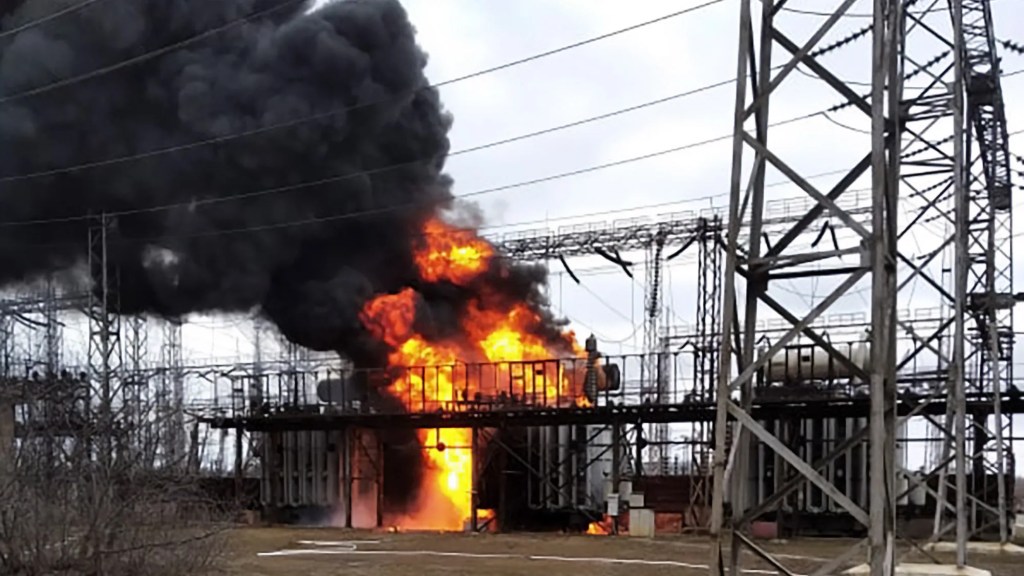
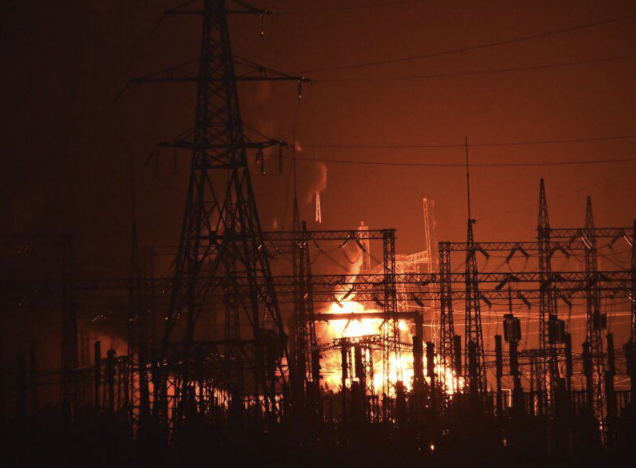
I grew up three hundred meters from one of the five combined heat and power plants that keep Kyiv warm — close enough to absorb the defining feature of a Soviet-designed energy system where everything is concentrated in one place. The heat and polluting emissions seem minor now, compared to the past four years of living in fear from the risk generated by such a targeted concentration of energy sources.
Of Ukraine’s roughly 55 gigawatts of pre-war capacity, about 11.5 gigawatts were available by February 2026 — a loss equal to the entire power systems of two Romanias. Cumulative energy damage exceeds $56 billion. The World Bank’s latest assessment puts the sector’s reconstruction needs at $91 billion, within a $588 billion national total.
Over the same four years, Ukraine ran an unplanned natural experiment in an alternative clean energy policy. In 2025, Ukraine added 1.5 gigawatts of solar, nearly double the previous year, taking cumulative capacity above 8.5 gigawatts; wind added 324 megawatts, more than the entire 2022–2025 period combined; battery storage reached 534 megawatts, anchored by a 200-megawatt DTEK, the largest private energy investor in Ukraine. Their Fluence installation is the largest in Eastern Europe. All nineteen turbines of the Tyligulska wind farm, roughly a hundred kilometers from the front, remain operational. To achieve a 100 percent survival rate in the hostile operating environment of war speaks volumes.
Clean energy is making Ukraine energy secure, and investors have taken note. In April 2026, DTEK committed €1.2 billion to a 650-megawatt onshore wind project in Poltava, sixty kilometers from the front line. Ukraine’s electricity exports grew sixfold in 2025, to 2.1 terawatt-hours, and the country was a net exporter for four months during a full-scale war.
Three mechanisms explain the divergence. First, cost-exchange: a cruise missile costs more than the turbine or solar array it destroys, so attacking dispersed assets is economically irrational — for the attacker loses value on every exchange. Second, repair-time asymmetry: damaged panels are swapped within hours and power rerouted the same day, while a thermal unit is a multi-year reconstruction project. Third, target dilution: hundreds of municipal microgrids convert a strike from a system-level event into a local inconvenience. None of this depends on resource constraints — 0.46 percent of Ukraine’s solar potential or 0.4 percent of its wind potential would cover national demand.
The binding constraint is capital. And here the numbers force a conclusion that grant-based thinking avoids. The energy sector’s $90.6 billion recovery need — of which $53.7 billion should follow green-transition principles — exceeds any plausible aid envelope; the International Energy Agency estimates Ukraine needs roughly 4 gigawatts of new solar annually through 2030, nearly triple the 2025 build rate. The counterfactual clarifies what is at stake in the choice of financing model. A reconstruction that defaults to fossil fuel rebuilds locks in an estimated 741 million tonnes of CO₂ over the decade — twice Ukraine’s pre-war annual emissions, layered onto the more than 300 million tonnes the war has already generated, and carried directly onto the enlarged EU’s 2040 and 2050 balance sheets as Ukraine’s electricity market couples with Europe’s.
This is the gap the EOPA Ukraine Energy Security Marshall Plan (UESMP) is built to close. The Plan is a strategic initiative to channel investment into the distributed energy systems the war has vindicated — accelerating Ukraine’s energy security, weakening Russia’s war economy, and advancing global energy security in the process. Its core instrument is AI-powered modeling that enables municipalities to rapidly design, finance, and deploy resilient local energy systems: distributed renewables, storage, smart microgrids, EV infrastructure, and secure energy management, integrated so that affordability, resilience, and security are built into municipal infrastructure from the start rather than bolted on later.
Additionally, because hardware without institutions fails, the Plan pairs capital with capacity. Through the Public Leadership Certificate Program and a Master’s in Public Leadership — delivered in partnership with the University of San Francisco and Elected Officials to Protect the Earth (EOPE) — local leaders receive advanced training in energy security, AI-enabled sustainable development planning, climate finance, negotiation, and public leadership. Participants then form policy teams, and the strongest program wins a prize and the staff support to implement it. The result is not just funded infrastructure but municipalities capable of planning, financing, and defending it.
The war has settled, at extraordinary cost, a question that energy planners could previously only model: which system architecture survives sustained attack. The plant I grew up beside is on the losing side of that answer. The task now for Kyiv and its partners is to ensure that the solution is financed, recognized, and not wasted.