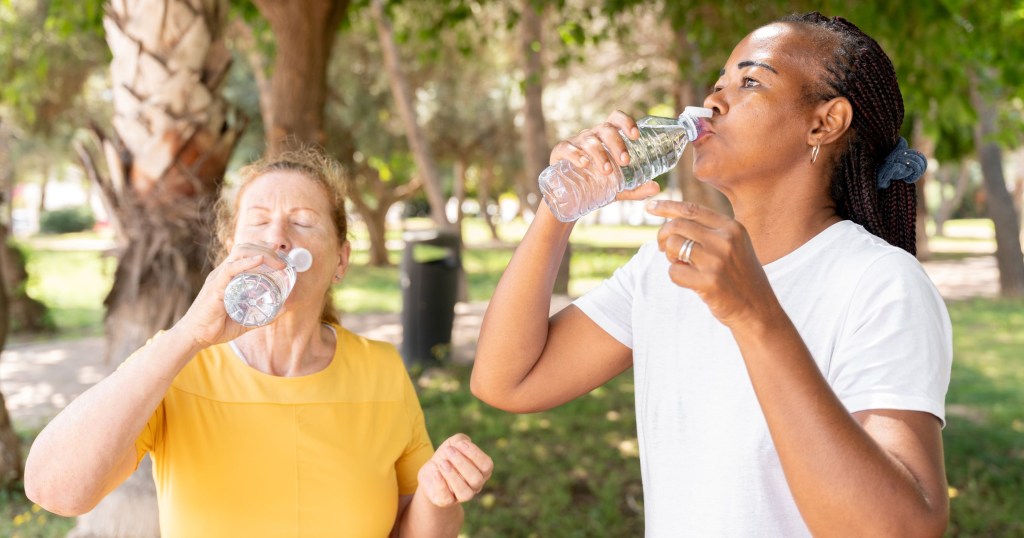
The Pennsylvania State Department urges people to stay cool during extreme heat. Limit time outdoors, especially at midday, and seek air-conditioned spaces and drink plenty of fluids to stay hydrated. (Adobe Stock)
Listen to this story HERE
By Danielle Smith
Sep 8, 2026
Western Pennsylvania elected officials are urging action to help environmental justice communities mitigate the effects of extreme heat fueled by fossil fuel pollution.
Pittsburgh recently experienced at least eight days of high temperatures, putting residents at risk of overheating.
Fred Quinn III, a former member of the Swissvale Borough Council, said recent summers have been extremely hot. Quinn pointed to a Carnegie Mellon University report revealing historically segregated Pittsburgh communities of color were, on average, nearly 6 degrees warmer than more affluent areas.
“They link that to the difference of fewer trees, more dark and impervious surfaces such as roofs and roads and parking lots that absorb and retain that heat in those poor neighborhoods that makes those feel hotter,” Quinn explained.
The study estimated adding 10% more tree coverage to a neighborhood could reduce temperatures by about 3.5 degrees. Quinn pointed out the “urban heat island effect” hurts Black neighborhoods more than districts with green spaces. He recommended government investment in planting more trees in Black neighborhoods and ensuring people have adequate air conditioning in their homes.
Angela Stribling, a member of the Swissvale Borough Council, said decades of disinvestment have left many predominantly Black Pittsburgh neighborhoods with less greenery and more pavement. She noted a recent storm caused outages and flooding but did little to ease the heat. For older residents, fewer shady places to cool off can mean higher air-conditioning bills and greater health risks and food insecurity.
“If you’re paying a higher cooling bill or a higher gas bill come wintertime, that impact’s taken away from other means of having to eat, having to pay for prescriptions, especially our senior population,” Stribling stressed.
Natisha Washington, president of the Wilkinsburg Borough Council, said a decade of organizing in Pittsburgh neighborhoods showed her how environmental conditions shape daily life. She pointed to Canadian wildfire smoke worsening air quality and fueling recent heat waves, with too few cooling centers available.
“Apparently, it was a thing for people to come to the borough building as a cooling center. And I think now that we have some upgrades happening, some energy efficiency work going on, we may have the ability to serve as that cooling center for our residents,” Washington emphasized.
Washington argued while leaders work to find safe housing during extreme weather, they also need to confront the climate effects driving the changes.