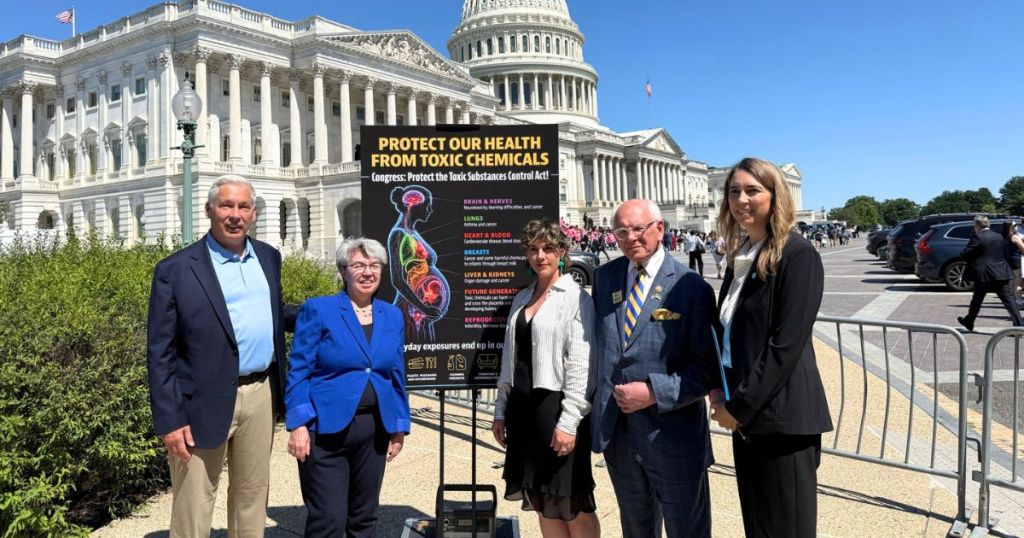
Craig Minor, retired US Air Force Lt. Col. on the far left with other members of a coalition of advocates. They traveled to Washington D.C. to talk with Congressional members and held a press conference to advise Congress to make sure the Toxic Standards Chemical Act is renewed and fully funded.
Op-ed by Craig Minor, retired US Air Force Lt. Col., stationed 4 years at the Wurtsmith Air Force Base (WAFB) in Oscoda, Michigan
My wife Carrie, our daughter Grace, our son Levi, and I wrote Overwhelmed: A Civilian Casualty of Cold War Poison to raise awareness about the possible dangers of per- and polyfluoroalkyl substances, known as PFAS. Our family book chronicles our journey raising Mitchell, who suffered severe health conditions caused by toxic groundwater at the former Wurtsmith Air Force Base (WAFB) in Oscoda, Michigan.
It took until 2016 for the Toxic Substances Control Act (TSCA) to gain the stronger legal tools needed to effectively limit the manufacture, processing, distribution, use, and disposal of dangerous chemicals like PFAS, TCE, and asbestos. But now those protections are at risk, which concerns me deeply after what my family, fellow service members and their families, civilians working on Wurtsmith, and the Oscoda community have endured.
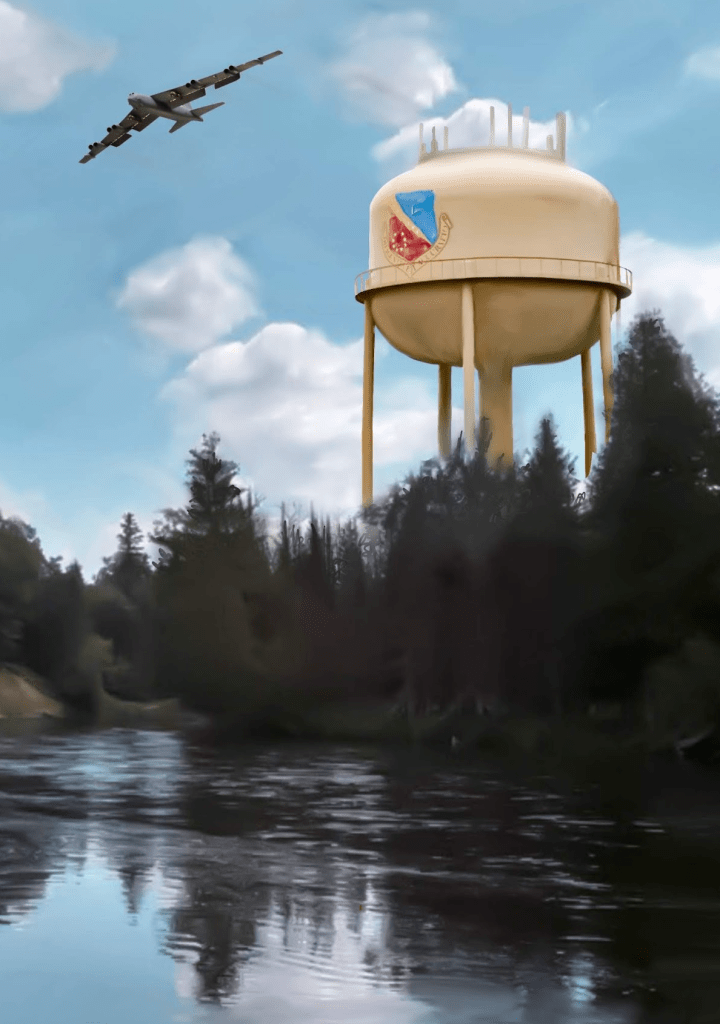
I was a B-52 aircraft commander stationed at Wurtsmith, when Carrie became pregnant with Mitchell. The base drinking water came from on-site groundwater wells. Mitchell was born a quadriplegic with severe cerebral palsy and microcephaly (small brain). He will always be a daddy’s boy, my special boy. We loved him dearly. We lost Mitchell in 2020 at the age 30.
Our lives were changed forever by drinking water we believed was safe. For the four years I was deployed at WAFB in the late 1980s, our family and the entire surrounding community trusted the Air Force. I served proudly, yet decades later I still carry PFAS from firefighter foam in my own body, at levels significantly higher than the national average. These PFAS chemicals, once in people or the environment, do not break down and is why they’re known as “forever chemicals.” Although the base closed in 1993, high concentrations of PFAS continue migrating on the surface and through the groundwater into nearby ponds, streams, rivers, interior lakes, and many private wells on the way to the Great Lake Huron.

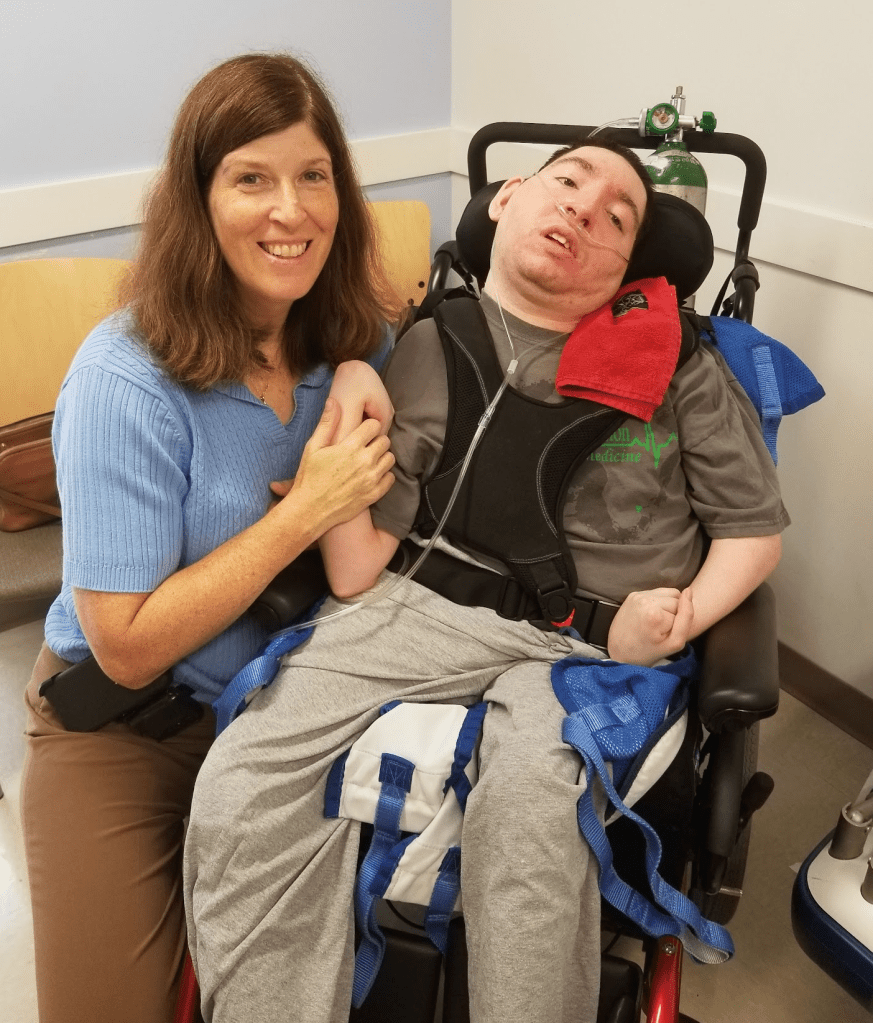
Craig Minor, retired US Air Force Lt. Col. at home with his family. His son, Mitchell, and wife, Carrie. The Wurtsmith Air Force base he was stationed at had drinking water that came from on-site groundwater wells that had PFAS. Mitchell was born while he was stationed there. Mitchell was a quadriplegic with severe cerebral palsy and microcephaly.
In our home, we have always eaten healthy, exercised regularly, and never drank or smoked. Despite our best efforts, Mitchell was born profoundly handicapped and Carrie suffered multiple miscarriages. Over the years, I have had tumors removed from my back and nose, been hospitalized several times for unexplained tachycardic arrhythmias, and dealt with ongoing prostate issues. My liver, spleen, and prostate remain chronically enlarged, and I have mild extremity neuropathy. I also underwent quadruple bypass surgery, followed by stents in my LAD (the “widow-maker” artery) that surgeons could not bypass. Today, my heart is in AFib and is blocked at the microvascular level. I require heavy medications, including nitroglycerin, just to manage angina pain when walking to the kitchen. My cardiologists say I have the heart of an 80-year-old.
All of these health issues — and our son’s profound disabilities — are consistent with extreme PFAS poisoning. PFAS is a colorless, odorless, and tasteless toxin that remains in the body for decades. It was in the water we drank, cooked with, and showered in daily at Wurtsmith Air Force Base (WAFB) and later at Wright-Patterson AFB.
According to the National Academies of Sciences, Engineering, and Medicine, as echoed by CDC and EPA, exposure to PFAS is linked to adverse health effects on the liver, kidneys, immune system, endocrine system, and cardiovascular system, and it can increase the risk of certain cancers. In 2019, my blood tested at 17 times the national average for toxic PFAS compounds, particularly PFHxS, which has one of the longest half-lives in blood serum and is a signature component of PFAS-based firefighting foam used at military bases.
PFAS in the soil and groundwater at Wurtsmith was first measured in 1998–1999, but it took until 2010 for the military to publicly acknowledge the widespread groundwater contamination problem at Wurtsmith, which extended to nearly every military location in the world. It was not until 2017 that the Department of Defense formally admitted finding PFAS in drinking water at military installations, after testing tap water at active locations and reporting the results to Congress. The Department of Defense and our nation’s leaders have been woefully behind in fully owning this tragedy and proactively protecting our service members, their families, and surrounding communities.
As a veteran, it is my duty to the nation to protect American citizens and to ensure no service member is left behind. Armed with my firsthand experience and degrees in law and chemistry, I compiled thousands of pages of government documents detailing the release of PFAS at Wurtsmith. Using this knowledge, I testified at a U.S. Senate field hearing. I have specific documents showing that the Air Force repeatedly poured firefighting foam on the ground from 1982 to 1992, just 500 yards upstream from the base’s drinking water source — directly above the aquifer that flowed straight into WAFB’s main water wells.
TSCA fees are up for renewal this year in Congress. But some in Congress are taking advantage of this moment to propose changes that could significantly weaken the EPA’s mandate to ensure that new chemicals will not harm people. The revised law would likely alter how scientific research is used in chemical safety reviews, giving greater weight to industry science and limiting the scope of exposure testing. Any controls put in place would need to be deemed “cost-effective” or “reasonably feasible” for companies. These changes would fundamentally alter the protective nature of TSCA.
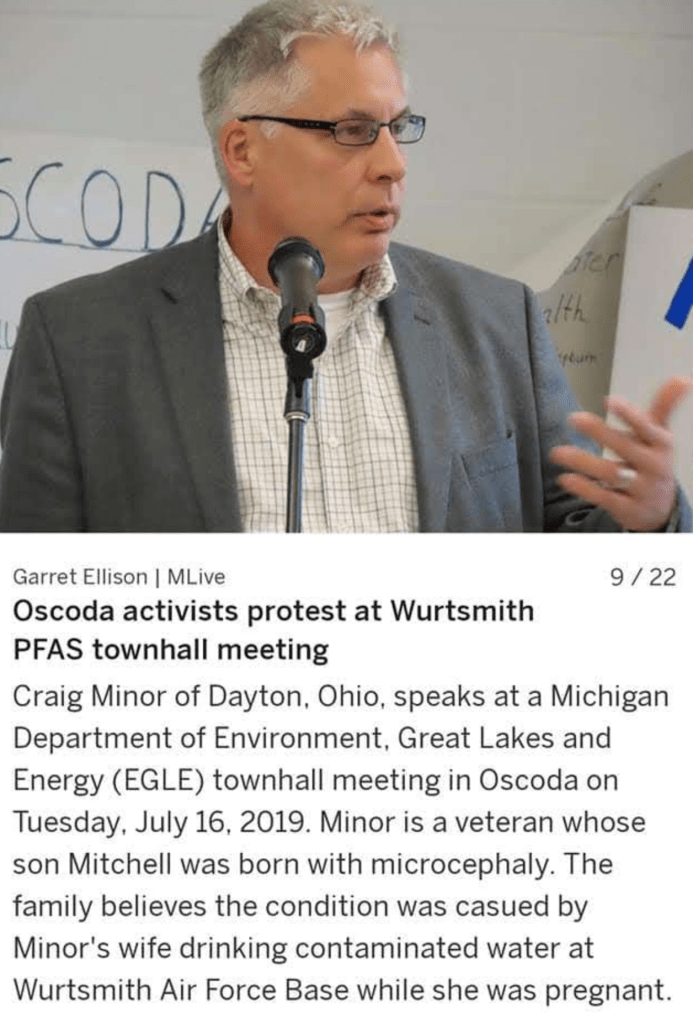
Bottom line: the proposed changes would seriously weaken TCSA’s chemical protections by putting industry profits ahead of public health.
Not only must our country clean up the PFAS contamination in the ground — we must also help heal the people and the lands it has harmed. This needless exposure occurred on nearly all military installations across the United States and abroad. It happened to veterans like me at Wurtsmith Air Force Base. More egregiously, it happened to our spouses, our children — including those in the womb — civilians working on base, firefighters, and the surrounding communities.
Every member of the Armed Forces takes an oath to support and defend the Constitution against all enemies, foreign and domestic. Toxic chemicals like PFAS are a hidden, insidious domestic enemy. Make no mistake: TSCA is one of our first and strongest tools to protect American families from these chemicals before they reach our businesses and homes.