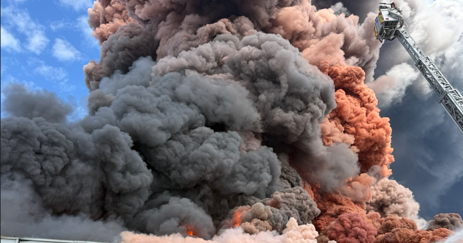
On Sept. 29, 2024, a chemical fire at Bio-Lab’s Conyers facility sent a toxic plume over metro Atlanta, forcing evacuations and shelter-in-place orders. (Chemical Safety Board website)
Listen to this story HERE
June 28, 2026
By Trimmel Gomes
A massive chemical fire in 2024, which forced thousands to flee their homes and sent a toxic plume over metro Atlanta, is now at the center of a warning from health advocates and elected officials.
They said Congress could weaken the law designed to prevent such disasters.
Sen. Tonya Anderson, D-Lithonia, whose district includes Conyers, where the BioLab fire occurred, said rolling back protections would put communities at risk.
“If those protections are weakened, then you will have corporations falling back or doing as least as possible or minimal to maintain a standard of safety,” Anderson contended. “We saw this with the BioLab.”
The Toxic Substances Control Act allows the EPA to restrict hazardous chemicals. There was congressional activity earlier this year to amend the law. Industry groups said current rules stifle innovation, while public health advocates argued the law needs more teeth.
Sarah Vogel, senior vice president of healthy communities for the Environmental Defense Fund, said the Toxic Substances Control Act, updated in 2016, has finally started to remove hazardous chemicals from the market but advocates are concerned Congress could reverse course.
“We are concerned that there’s a concerted effort in Congress to reopen this law and to take measures that we think would significantly weaken it and leave the public unprotected,” Vogel explained.
In studying the BioLab fire, Georgia Tech researchers identified 26 different chemicals in the air. This month, three people, including two deputies, filed a lawsuit over lung injuries. They said BioLab ignored safety warnings for years.
The company has since stopped production at the Conyers plant and a compensation program was established. Advocates said the disaster is a warning of what could happen elsewhere if regulations are relaxed.