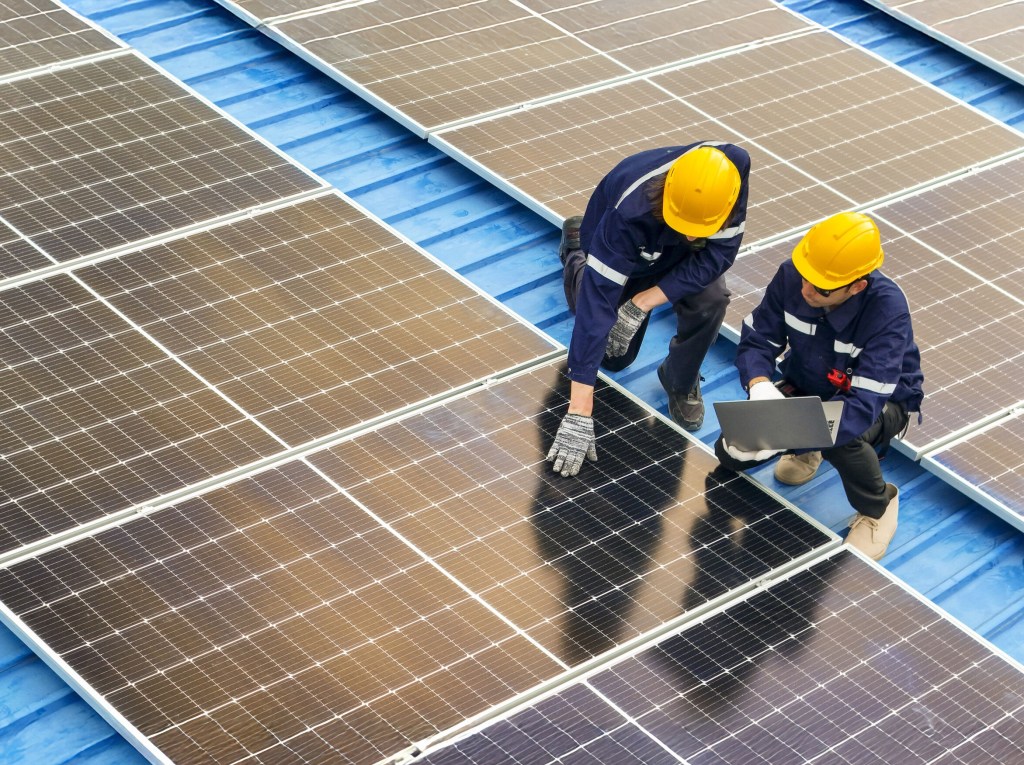
Clean energy jobs grew more than three times faster than the rest of the U.S. economy in 2024, bringing the total number of clean energy workers in the U.S. to over 3.5 million. (Adobe Stock)
Listen to the story HERE
By Terri Dee
Feb 4, 2026
Illinois and 15 other states will get back funding for clean-energy projects after a major ruling.
A federal judge decided that President Donald Trump illegally blocked more than $7 billion in grants to states that supported Kamala Harris during the 2024 election. The money is intended for battery plants, hydrogen technology projects and electric grid upgrades.
Micaela Preskill, director of state advocacy for the nonpartisan environmental group E2, said the administration’s decision to cancel the funds had negative implications for Illinois.
“When the Energy Department makes decisions to cancel grants that are already in the pipeline, it’s bad for the economy,” she said. “These grants were providing opportunities for matching private investment, were going to lead to developing new projects that would be creating jobs bringing local development to communities.”
The Department of Energy has claimed the projects were terminated because they fell short of addressing the nation’s energy demands and were not economically sound. The judge ruled the Trump administration’s actions violated the U.S. Constitution’s equal protection requirements and failed to show how their decision advanced government interest.
Clean-energy advocates have argued the industry is growing and needs federal support. According to the energy information site Low Carbon Energy, between September 2024 and August 2025, low-carbon sources accounted for more than 68% of electricity consumption in Illinois, and wind and solar contributed about 13%.
Preskill said she believes there needs to be more investment in the country’s energy infrastructure to prepare for the future.
“Supporting clean-energy grants is not just about environmental progress,” she said. “It’s about keeping the U.S. competitive, and industries that will define the next generation of manufacturing and economic growth.”
She said the U.S. s facing unprecedented rising energy demand, and grants such as these will help states to meet the challenge.