

Listen to the story HERE
By Roz Brown
Aug 20, 2025
Drought and climate change across the Southwest have made water the “great equalizer,” and as a future usage agreement is hammered out, New Mexico’s ancient acequia system is getting a second look.
The Colorado River Basin provides water to seven states and some 40 million people, but the usage is not equal and states have until next October to find a solution before the federal government steps in.
Camilla Bustamente, a Santa Fe County Commissioner, said the state’s 700 gravity-fed acequia irrigation ditches provide a democratic model meant to benefit entire communities over any individual user.
“The ones in northern New Mexico are among the few in the world,” Bustamente pointed out. “This system has worked now for hundreds of years to assure people are able to have food where they live.”
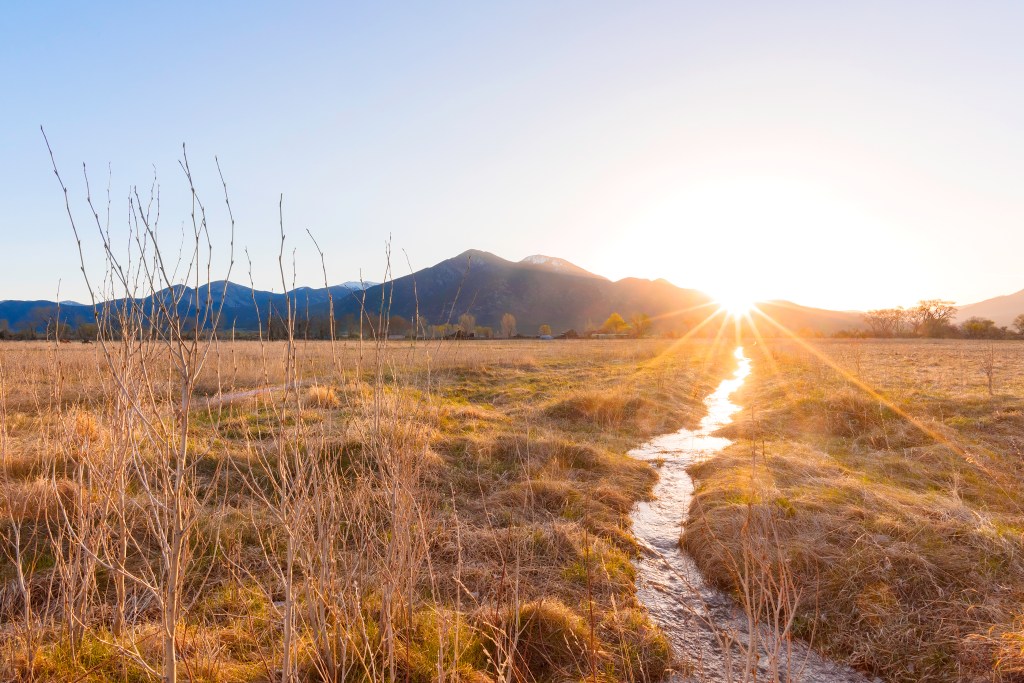
Acequias have been a cornerstone of agriculture and community in the Southwest since the arrival of Spanish settlers in the 17th century. They carry water from rivers or streams to fields and gardens. A channel at the bottom returns a significant amount of water to the original stream or waterway.
The Colorado and Rio Grande are two separate watersheds, but both rivers face increasing pressure from drought, growing populations and competing demands for water resources.
Kenneth Salazar, former chair of the Santa Cruz Irrigation District, said management is key.
“It’s such an intricate system and everybody needs to be cooperative during times of drought,” Salazar urged. “Things are changing. There’s just so many issues and factors involved with water, it’s just incredible.”
Since negotiations over water usage began, there has been disagreement between the four upper and three lower basin states about how to interpret a century-old legal agreement. Salazar acknowledged there is a lot for all parties to consider.
“You can deal with the drought or climate change if you know how much water everybody has,” Salazar emphasized. “These adjudications are very, very important. It’s a delicate thing.”
Many view the water used to keep lawns and golf courses green in the arid Southwest as poor stewardship, but alfalfa grown to feed beef livestock uses more water than all cities and industries in the entire Colorado River Basin.