

Listen to the story HERE
By Alex Gonzalez
October 21, 2024
As the end of October approaches, parts of Arizona are still grappling with relentless heat, which is why environmental advocates are congratulating Tempe leaders on the investments they’ve made to battle the effects of the climate crisis.
Paul Coseo, associate professor of landscape architecture, urban design and environmental design at Arizona State University, said this year Tempe and the Phoenix metro area experienced the hottest summer on record.
He added with prolonged, extreme heat comes diminished quality of life, risk of illness and even death. Last year, 645 people died in Maricopa County from heat.
“We work with our partners, like the City of Tempe and others. to identify the key research questions that need to be answered for more strategic climate adaptation,” Coseo explained. “And also, I would say, faster.”
Coseo said the university’s federally funded Urban Nature Project has led to a regional approach in planting trees in strategic places, expanding shade where people need it the most and reducing what is known as urban heat island effect. The City of Tempe has a goal of reaching a 25% tree and shade canopy by 2040.
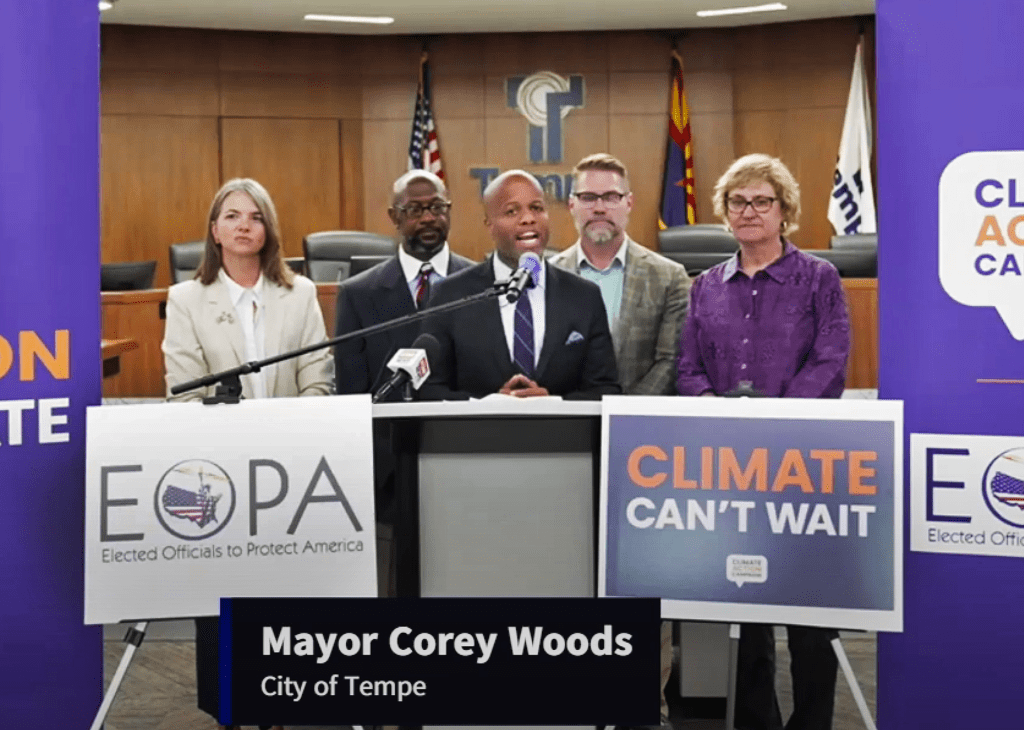
Tempe Mayor Corey Woods contends cities in Arizona, as well as across the nation, need to start designing cities with what he calls “intention” to address the climate crisis. He said federal dollars are helping Arizonans make weatherization upgrades to help lower utility bills, all while decreasing carbon emissions and protecting the environment.
Woods pointed out the city has been working on increasing the number of affordable housing units, but begs the question, “What is it worth if the city is unlivable?”
“We know that with the added risk of extreme heat, utility bills skyrocket,” Woods acknowledged. “But we are going to do everything we can to protect our most vulnerable residents and, more importantly, make sure that they can stay in their own homes.”
Tempe received an Inflation Reduction Act grant of almost $240,000 to weatherize mobile homes in three different parks throughout the city. Housing affordability is an issue Woods stressed must be tackled from all angles.