

May 5, 2025
Op-ed by Ahmad Zahra, Fullerton Council Member
Wildfires are no longer seasonal. We deal with them all the time. But now they are increasingly bringing death and upheaval to communities throughout the state. Last January, the world watched in horror as firestorms raged across Los Angeles and Ventura Counties, leaving destruction that resembled a war zone. For survivors-friends and families, the trauma and anxiety can’t be measured.
Our use of fossil fuels continues to fuel the flames of destruction. The devastation from those fires alone is estimated to exceed $250 billion, and yet the fossil fuel giants fueling the flames continue raking in profits, untouched and unaccountable.
Add drought, and torrential rains to the list of extreme weather the state has been experiencing and there is no doubt we are living inside a climate crisis of epic proportions. Between 1980 and 2024, 46 extreme weather and climate disaster events affected California, resulting in losses exceeding $1 billion each. We need to take more actions to decarbonize the electric power sector so we can begin to hold back these extreme weather events.
Here in Fullerton, like many local communities, we’ve already felt the toll of extreme heat and infrastructure strain from fire-prone areas, such as our nature preserve, Coyote Hills, and other large open spaces, as well as rising water costs and aging roads. As a historic city, many of our neighborhoods are lined with older homes that lack modern protections against heat and wildfire smoke. One of my constituents, a new mom living in one of these older homes without air conditioning, shared with me how worried she feels about her infant during heatwaves when indoor temperatures become unbearable. Residents, especially our seniors, are growing increasingly anxious about the rising fire risk and the limited resources available to cope. While our city has made meaningful strides in sustainability, we’re still stretched very thin when disaster strikes.
Our local communities deserve real investment in resilience, which includes state investment in renewable energy like offshore wind (OSW).
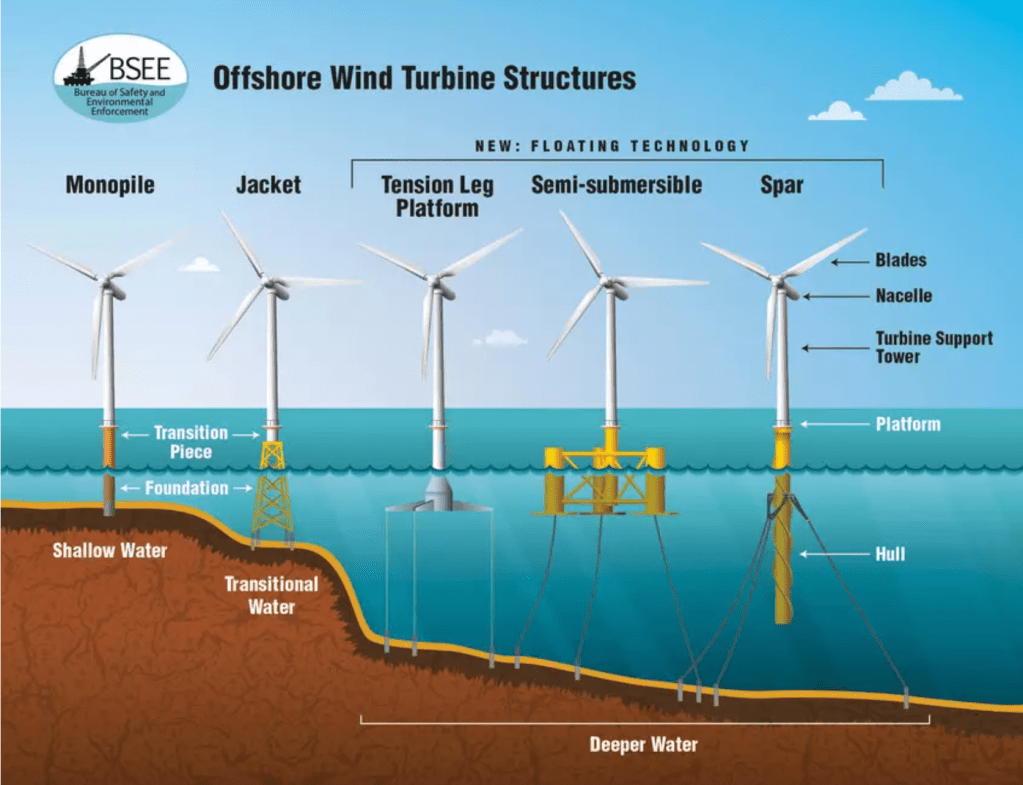
The exciting thing is we can transition our entire economy to run on 100 percent renewable energy with floating offshore wind turbines off our coast begin feeding the grid. Offshore wind represents a massive, untapped resource just beyond our shores in federal waters.
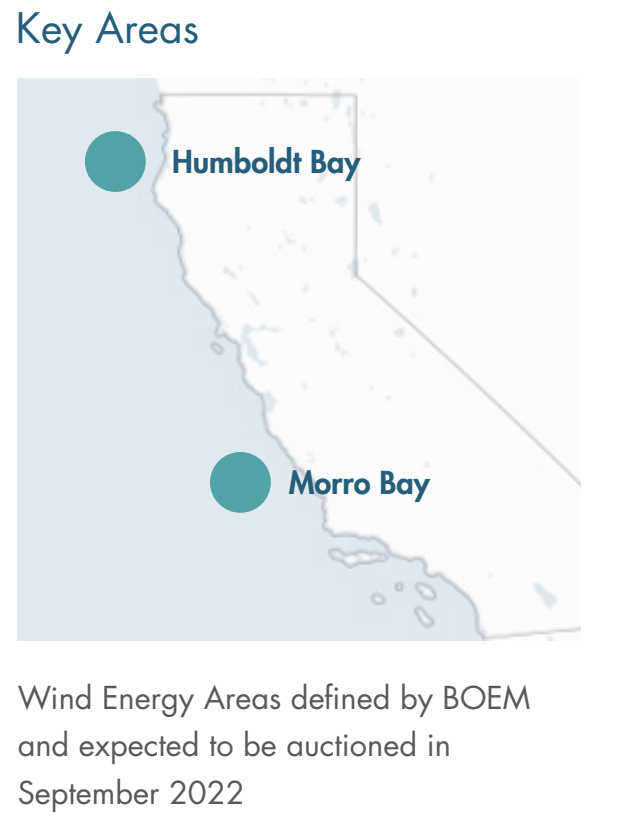
The National Renewable Energy Laboratory estimates California has 200 GW of OSW potential. Currently the state has more than 25 GW in five existing leases. The floating wind turbines off the coast of Humboldt and Morro Bay will be different than those on the east coast as they will be located in deep waters where they cannot be fixed to the bottom. They will be positioned on floating platforms tethered to the seabed. This method has been used in Europe successfully. The turbines will barely be visible on their floating platforms 20 miles off the coast and are not threatening to whales.
Offshore wind clean energy can improve the reliability of electricity and provide substantial co-benefits, reducing ordinary air pollution as well as greenhouse gas emissions that cause climate change. The air quality in environmental justice communities, whose residents suffer from illnesses caused by fossil fuel extraction and processing, will increase dramatically with OSW. Those living next to refineries and/or pumpjacks will no longer have to suffer from chronic asthma, or cancers.
OSW is a never-ending clean energy resource that blows even more at night, when solar energy can’t be collected. With battery storage, California can be powered day and night to meet our energy needs as OSW will easily augment solar and other renewables.
I’m encouraged by the funds promised for ports from the climate bond that passed last November. With this $475 million in funding for port infrastructure upgrades to support offshore wind, communities will be able to see preparations for the larger buildouts begin.
This is a once in a generation opportunity for us to capture clean energy in large quantities that will spur significant economic development in our renewable energy transition from dirty global warming fossil fuels.
The equitable buildout that is projected and planned for by the California Energy Commission (CEC) will provide tangible avenues for local Tribes, communities, and California workers. This new industry will bring opportunities for businesses to support it up and down the coast while adding thousands of good paying union jobs. Local economies will flourish as more is spent in their communities.
Reports show deploying 25 GW of OSW can create thousands of jobs, supply 15-20 percent of the state’s new clean energy, offer ratepayers affordable, reliable clean power, drive economies of scale, and generate enough competitively priced electricity for up to 25 million homes.
A study co-authored by Adam Rose, Professor at the USC Price School of Public Policy synthesized findings from 153 previous studies. It estimates that the OSW industry in California could create up to 450,668 jobs overall in construction and 17,273 jobs per year in operation and maintenance. Building enough OSW to help the state meet its goal of 100 percent carbon-free electricity by 2045 could contribute up to a total of $54.5 billion to California’s gross domestic product. Operations and maintenance would top out at another $2.3 billion in GDP annually.
No matter what happens at the federal level, here in the world’s fourth largest economy we can and are able to transition to 100 percent clean energy with offshore wind.