


EPA announces eight selections under the Greenhouse Gas Reduction Fund’s National Clean Investment Fund and Clean Communities Investment Accelerator through President Biden’s Investing in America agenda
April 4, 2024
WASHINGTON – On April 4, the U.S. Environmental Protection Agency announced its selections for $20 billion in grant awards under two competitions within the historic $27 billion Greenhouse Gas Reduction Fund (GGRF), which was created under the Inflation Reduction Act (IRA).
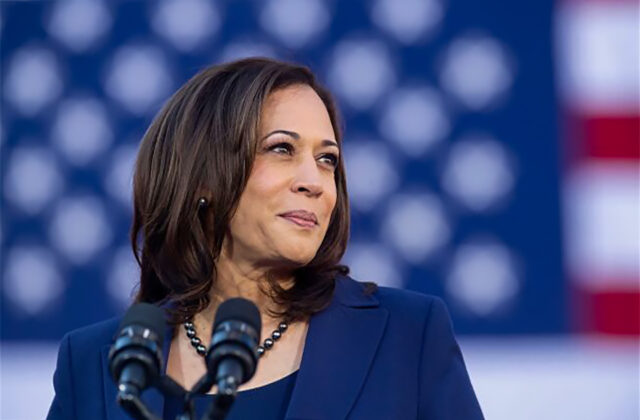
“When President Biden and I made the largest investment in our nation’s history to address the climate crisis and to build a clean energy economy, we made sure that every community would be able to participate and benefit,” said Vice President Kamala Harris. “The grantees announced will help ensure that families, small businesses, and community leaders have access to the capital they need to make climate and clean energy projects a reality in their neighborhoods.”
The three selections under the $14 billion National Clean Investment Fund and five selections under the $6 billion Clean Communities Investment Accelerator will create a national clean financing network for clean energy and climate solutions across sectors, ensuring communities have access to the capital they need to participate in and benefit from a cleaner, more sustainable economy. By financing tens of thousands of projects, this national clean financing network will mobilize private capital to reduce climate and air pollution while also reducing energy costs, improving public health, and creating good-paying clean energy jobs in communities across the country, especially in low-income and disadvantaged communities.
Vice President Kamala Harris and EPA Administrator Michael S. Regan announced the selections under these two grant competitions in Charlotte, North Carolina. While in Charlotte, the Vice President and Administrator met with a homeowner in a historically Black community, where a local nonprofit, Self-Help, worked with community partners to finance, renovate, and construct energy-efficient, affordable homes for low- and moderate-income families. Thanks to that partnership, this first-time homeowner pays significantly lower energy bills and has a healthy and comfortable place to raise his family.
“President Biden and Vice President Harris have put communities at the center of their Investing in America agenda. Today, we’re putting an unprecedented $20 billion to work in communities that for too long have been shut out of resources to lower costs and benefit from clean technology solutions,” said EPA Administrator Michael S. Regan. “The selectees announced today will deliver transformational investments for American communities, businesses, and families and unleash tens of thousands of clean technology projects like putting solar on small businesses, electrifying affordable housing, providing EV loans for young families, and countless others. That translates to good-paying jobs, energy bill savings, and cleaner air, all while delivering on President Biden’s historic agenda to combat climate change.”
The selections the Vice President is announced will ensure more families can experience those same benefits. In fact, one of the selections being announced today will allow Self-Help and its partners as part of the Climate United Fund’s application to deliver similar home efficiency projects to over 30,000 homes across the country.
Collectively, the selected applicants have committed to driving significant impact toward the program’s objectives. They will reduce or avoid up to 40 million metric tons of climate pollution per year. They will mobilize almost $7 of private capital for every $1 of federal funds, ensuring that each public dollar is leveraged for significant private-sector investment.
They will dedicate over $14 billion of capital—over 70 percent of the selections for awards announced today—toward low-income and disadvantaged communities, making the Greenhouse Gas Reduction Fund the single largest non-tax investment within the Inflation Reduction Act (IRA) to build a clean energy economy while benefiting communities historically left behind.
To date, the eight selected applicants have supported thousands of individuals, businesses, and community organizations to access capital for climate and clean energy projects.
“So many families face the same challenges: something breaks, you can’t afford to replace it, and the short-term solution is really no solution at all,” said homeowner Mildred Carter of DeSoto, Georgia. “I’m grateful for the help I got to install a brand-new heat pump water heater that provides me all the hot water I need while saving energy and money. And I’m grateful that there’s now going to be more options for families that will make these new appliances affordable and bring the benefits to them too.”
With their awards, selectees will unleash tens of thousands of more projects like these across the country for decades to come:
- When her water heater died, Mildred Carter in DeSoto, Georgia could not immediately afford to replace it. With the support of Power Forward Communities coalition member Rewiring America, Mildred was enrolled in a whole-town demonstration program that would combine Georgia Power incentives of up to $5,000 with philanthropic support for energy efficiency upgrades in her home. Her brand-new heat pump water heater was installed on December 23, just in time for the holidays.
- The National Trust Community Investment Corporation, Appalachian Community Capital’s partner, recently led the charge on a $5.7 million sustainable rehabilitation of the historic National Guard Armory building located in one of Owosso, Michigan’s underserved communities. Alongside the Shiawassee Chamber of Commerce, the organization helped transform the space into an incubator for Owosso’s small businesses and local nonprofits complete with high-efficiency, all-electric heating and ENERGY STAR certified appliances.
- Opportunity Finance Network member Solar and Energy Loan Fund (SELF) operates in Florida, which has experienced some of the most disastrous effects of the climate crisis. SELF, a U.S.-Treasury certified Community Development Financial Institution (CDFI), recently partnered with Miami-Dade County’s Office of Resilience to invest in solar power, window and roof upgrades, and aging-in-place upgrades—including the installation of solar panels and battery backup systems for Gibson Plaza, a 65-unit affordable senior housing project. These investments have helped the community reduce energy costs while also building resiliency, ensuring residents can stay in their homes and remain protected against future climate impacts.
Together, the eight selected applicants have committed to delivering on the three objectives of the Greenhouse Gas Reduction Fund: reducing climate and air pollution; delivering benefits to communities, especially low-income and disadvantaged communities; and mobilizing financing and private capital.
“No one should have to suffer the injustice of living on the frontlines of the climate crisis. The Inflation Reduction Act’s Greenhouse Gas Reduction Fund recognizes the power of federal funding to ensure worthy projects are scaled up to levels where their impact can make major differences for communities across the country who for far too long have been neglected.” Christian Brock, CEO of Elected Officials to Protect America. “The GGRF will empower leaders in Justice40 communities create economic opportunities with good paying jobs, while transitioning to a clean energy economy for all.”
As part of this collective effort, selected applicants have committed to:
- Fund projects that will reduce or avoid greenhouse gas emissions by up to 40 million metric tons of CO2 equivalent per year—equivalent to the emissions of nearly 9 million typical passenger vehicles—making a significant contribution to the President’s climate goals of reducing emissions 50 to 52 percent below 2005 levels in 2030 and achieving net-zero emissions by no later than 2050.
- Dedicate over $14 billion toward low-income and disadvantaged communities, including over $4 billion for rural communities as well as almost $1.5 billion for Tribal communities—ensuring that program benefits flow to the communities most in need and advance the President’s Justice40 Initiative.
- Achieve a private capital mobilization ratio of nearly 7 times, with every dollar in grant funds leveraged for almost seven dollars in private funds over the next seven years—turning $20 billion of public funds into $150 billion of public and private investment to maximize the impact of public funds.
“After more than a decade of hard work, our vision to create a national climate bank is a reality. Thanks to the $20 billion we secured in the Inflation Reduction Act, the Greenhouse Gas Reduction Fund will draw on the experience of public, semi-public, and non-profit community leaders to unleash tens of billions of dollars to deliver more than money, but also justice, to disadvantaged communities. As the single largest climate investment in the Inflation Reduction Act, the Greenhouse Gas Reduction Fund will cut emissions, protect health, and create job and economic opportunities so that communities won’t just survive but thrive for generations to come. Even more than money, the Greenhouse Gas Reduction Fund is delivering hope – hope for justice and for a livable future. I applaud the Environmental Protection Agency’s work to quickly stand up this critical program while ensuring transparency and collaboration,” said U.S. Senator Edward J. Markey, Chair, Senate EPW Subcommittee on Clean Air, Climate, and Nuclear Safety, and co-author of the National Climate Bank Act.
These commitments have been taken or derived from the application packages that selected applicants submitted to EPA and adjusted for the amount of funding received. Moving forward, EPA will work with selected applicants to revise their application packages into work plans that reflect formal commitments through the award agreements.
“These awards are making clean energy financing accessible to low-income and underserved communities that have for far too long carried the brunt of environmental pollution, helping us attack the climate crisis head on and creating jobs while lowering energy costs. These investments will fund projects that otherwise would not have been possible, and will mobilize nearly seven times as much in private capital. I’m proud to have helped author and pass the Greenhouse Gas Reduction Fund and look forward to continuing to invest in the most impactful and urgent projects to reach our climate and environmental justice goals,” said Congresswoman Debbie Dingell (MI-06).
Selected Applicant Information
The eight selected applicants across the National Clean Investment Fund and Clean Communities Investment Accelerator will create a first-of-its- national clean financing network that will finance climate and clean energy projects, especially in low-income and disadvantaged communities.
National Clean Investment Fund (NCIF) Selectees
Under the $14 billion National Clean Investment Fund, the three selected applicants will establish national clean financing institutions that deliver accessible, affordable financing for clean technology projects nationwide, partnering with private-sector investors, developers, community organizations, and others to deploy projects, mobilize private capital at scale, and enable millions of Americans to benefit from the program through energy bill savings, cleaner air, job creation, and more. Additional details on each of the three selected applicants, including the narrative proposals that were submitted to EPA as part of the application process, can be found on EPA’s Greenhouse Gas Reduction Fund NCIF website.
All three selected applicants surpassed the program requirement of dedicating a minimum of 40% of capital to low-income and disadvantaged communities. The three selected applicants are:
- Climate United Fund ($6.97 billion award), a nonprofit formed by Calvert Impact to partner with two U.S. Treasury-certified Community Development Financial Institutions (CDFIs), Self-Help Ventures Fund and Community Preservation Corporation. Together, these three nonprofit financial institutions bring a decades-long track record of successfully raising and deploying $30 billion in capital with a focus on low-income and disadvantaged communities. Climate United Fund’s program will focus on investing in harder-to-reach market segments like consumers, small businesses, small farms, community facilities, and schools—with at least 60 percent of its investments in low-income and disadvantaged communities, 20 percent in rural communities, and 10 percent in Tribal communities.
- Coalition for Green Capital ($5 billion award), a nonprofit with almost 15 years of experience helping establish and work with dozens of state, local, and nonprofit green banks that have already catalyzed $20 billion into qualified projects—and that have a pipeline of $30 billion of demand for green bank capital that could be coupled with more than twice that in private investment. The Coalition for Green Capital’s program will have particular emphasis on public-private investing and will leverage the existing and growing national network of green banks as a key distribution channel for investment—with at least 50 percent of investments in low-income and disadvantaged communities.
- Power Forward Communities ($2 billion award), a nonprofit coalition formed by five of the country’s most trusted housing, climate, and community investment groups that is dedicated to decarbonizing and transforming American housing to save homeowners and renters money, reinvest in communities, and tackle the climate crisis. The coalition members—Enterprise Community Partners, LISC (Local Initiatives Support Corporation), Rewiring America, Habitat for Humanity, and United Way—will draw on their decades of experience, which includes deploying over $100 billion in community-based initiatives and investments, to build and lead a national financing program providing customized and affordable solutions for single-family and multi-family housing owners and developers—with at least 75 percent of investments in low-income and disadvantaged communities.
Clean Communities Investment Accelerator (CCIA) Selectees
Under the $6 billion Clean Communities Investment Accelerator, the five selected applicants will establish hubs that provide funding and technical assistance to community lenders working in low-income and disadvantaged communities, providing an immediate pathway to deploy projects in those communities while also building capacity of hundreds of community lenders to finance projects for years. Each of the selectees will provide capitalization funding (typically up to $10 million per community lender), technical assistance subawards (typically up to $1 million per community lender), and technical assistance services so that community lenders can provide financial assistance to deploy distributed energy, net-zero buildings, and zero-emissions transportation projects where they are needed most. 100 percent of capital under the CCIA is dedicated to low-income and disadvantaged communities. Additional details on each of the five selected applicants, including the narrative proposals that were submitted to EPA as part of the application process, can be found on EPA’s Greenhouse Gas Reduction Fund CCIA website.
The five selected applicants are:
- Opportunity Finance Network ($2.29 billion award), a ~40-year-old nonprofit CDFI Intermediary that provides capital and capacity building for a national network of 400+ community lenders—predominantly U.S. Treasury-certified CDFI Loan Funds—which collectively hold $42 billion in assets and serve all 50 states, the District of Columbia, and several U.S. territories.
- Inclusiv ($1.87 billion award), a ~50-year-old nonprofit CDFI Intermediary that provides capital and capacity building for a national network of 900+ mission-driven, regulated credit unions—which include CDFIs and financial cooperativas in Puerto Rico—that collectively manage $330 billion in assets and serve 23 million individuals across the country.
- Justice Climate Fund ($940 million award), a purpose-built nonprofit supported by an existing ecosystem of coalition members, a national network of more than 1,200 community lenders, and ImpactAssets—an experienced nonprofit with $3 billion under management—to provide responsible, clean energy-focused capital and capacity building to community lenders across the country.
- Appalachian Community Capital ($500 million award), a nonprofit CDFI with a decade of experience working with community lenders in Appalachian communities, which is launching the Green Bank for Rural America to deliver clean capital and capacity building assistance to hundreds of community lenders working in coal, energy, underserved rural, and Tribal communities across the United States.
- Native CDFI Network ($400 million award), a nonprofit that serves as national voice and advocate for the 60+ U.S. Treasury-certified Native CDFIs, which have a presence in 27 states across rural reservation communities as well as urban communities and have a mission to address capital access challenges in Native communities.
Review and Selection Process Information
The eight applicants were selected through a robust process to review and select applications for each of the two competitions. The multi-staged review and selection process included dozens of federal employees—all screened through ethics and conflict of interest checks as well as trained on the program requirements and evaluation criteria—participating in the review and scoring of the selected applications through expert review panels; interviews with senior officials; and recommendations from an expert, interagency senior review team. Additional details on the review and selection process can be found on EPA’s Greenhouse Gas Reduction Fund NCIF and CCIA selection process website.
EPA anticipates that awards to the selected applicants will be finalized by July 2024 and that projects will be funded by the selected applicants and their partners shortly thereafter. Note that all of the selections are contingent on the resolution of all administrative disputes related to the competitions. Review frequently asked questions about the selection announcement, including the awards process.
Informational Webinars
EPA will host informational webinars as part of the program’s commitment to public transparency. EPA has scheduled webinars for each of the two programs, with additional webinars to be announced on EPA’s GGRF webpage. The details for the scheduled webinars are included below. The webinars will be recorded and posted on EPA’s GGRF webpage.
- National Clean Investment Fund webinar: Wednesday, April 10, 2024, 1:00pm – 1:30pm ET. Join the April 10 meeting
- Clean Communities Investment Accelerator webinar: Thursday, April 11, 2024, 1:00pm – 1:30pm ET. Join the April 11 meeting
Additional information can be found on EPA’s GGRF webpage.
“President Biden’s Investing in America agenda has equity as its North Star, centering on communities too often left out of the conversation. Now, through the historic Greenhouse Gas Reduction Fund, communities across the country can take full control of their clean energy future leveraging federal and private funding for tried and true solutions that will strengthen their energy resilience, slash costs for their residents and revitalize their local economies,” said U.S. Energy Secretary Jennifer M. Granholm.
Additional Background
The President’s Inflation Reduction Act authorized the EPA to create and implement the Greenhouse Gas Reduction Fund, a historic $27 billion investment to combat the climate crisis by mobilizing financing and private capital for greenhouse gas- and air pollution-reducing projects in communities across the country. Together, the Greenhouse Gas Reduction Fund’s National Clean Investment Fund, Clean Communities Investment Accelerator, and Solar for All programs will finance clean technology deployment nationally, finance clean technology deployment in low-income and disadvantaged communities while simultaneously building the capacity of community lenders that serve those communities, and spur adoption of clean distributed solar energy that lowers energy bills for millions of Americans in low-income and disadvantaged communities. EPA expects to announce additional information on the $7 billion Solar for All competition later this spring. These programs advance President Biden’s Justice40 Initiative while expanding good-paying job opportunities in domestic industries.