

New measure will help prevent price spikes that cost Californians upwards of $2 billion last year, giving the state more tools to require that petroleum refiners backfill supplies and plan ahead for maintenance.
October 18, 2024
By Ramona Cornell du Houx
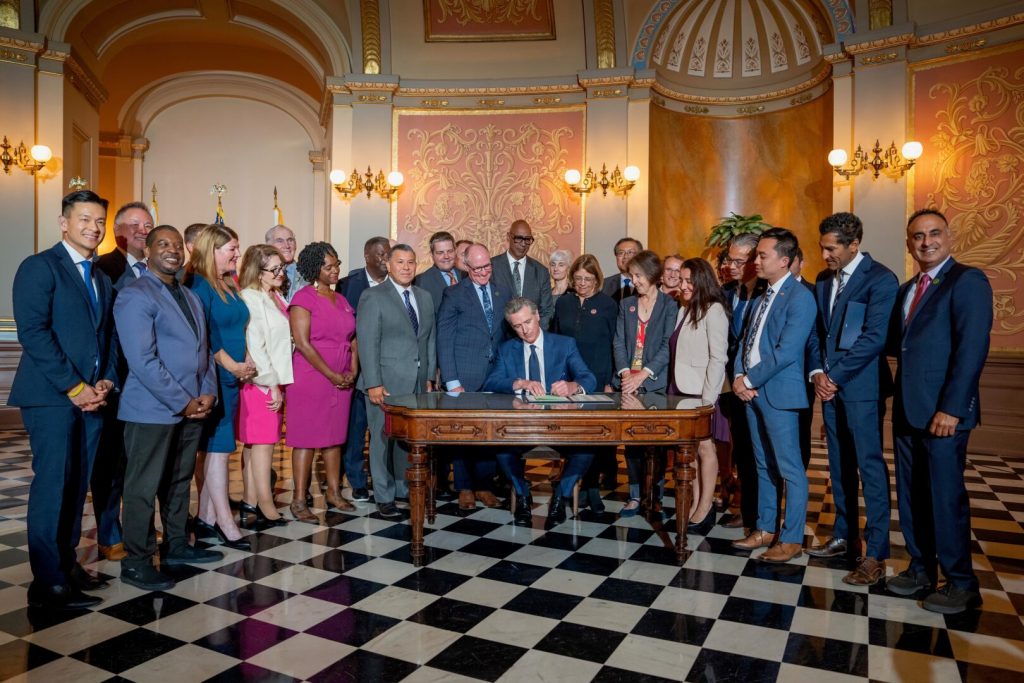
SACRAMENTO – On October 14, 2024, surrounded by legislators and community leaders in the rotunda of the California State Capitol, Governor Gavin Newsom signed legislation to help prevent gas price spikes and save consumers money at the pump.
Two days after signing the legislation, Phillips 66’s announcement that it would shut down its LA refinery in 2025.
The California Energy Commission. (CEC) Vice Chair Siva Gunda said in a statement that Phillips 66 has been a “valuable partner in California’s transition” and that the company’s “plan to replace the production lost from the refinery closure is an example of the type of creative solutions that are needed as we transition away from fossil fuels. We remain dedicated to collaborating with industry leaders to secure an affordable and reliable fuel supply for all consumers as we move forward,
The legislation — ABX2-1 authored by Assemblymembers Gregg Hart and Cecilia Aguiar-Curry and Senator Nancy Skinner — allows the state to require oil refiners to maintain a minimum inventory of fuel to avoid supply shortages that create higher gasoline prices for consumers and higher profits for the industry. It also authorizes the California Energy Commission to require refiners to plan for resupply during refiner maintenance outages.

“Price spikes have cost Californians billions of dollars over the years, and we’re not waiting around for the industry to do the right thing — we’re taking action to prevent these price spikes and save consumers money at the pump. Now, the state has the tools to make sure they backfill supplies and plan ahead for maintenance so there aren’t shortages that drive up prices. I’m grateful to our partners in the Senate and Assembly for acting quickly to push this forward and help deliver relief for Californians,” said CA Governor Gavin Newsom.
“Today, we’re coming together to provide needed relief at the pump and help keep hard-earned dollars in the pockets of Californians. I’m grateful to Governor Newsom, Speaker Rivas, and members of the Senate and Assembly for taking swift action on this critical issue. That said, our work isn’t stopping. We’re going to continue to grind away to help lower the cost of living for folks in every corner of the Golden State. It’s a necessity.” — Senate President pro Tempore Mike McGuire (D-North Coast)
Why it’s needed
“With this new law, big oil companies are now responsible for stabilizing prices at the pump. It’s a critical accomplishment, but our work is not done. I will continue to fight to lower the cost of living, because housing, groceries and everyday necessities must be more affordable for all Californians.” — Assembly Speaker Robert Rivas (D-Salinas)
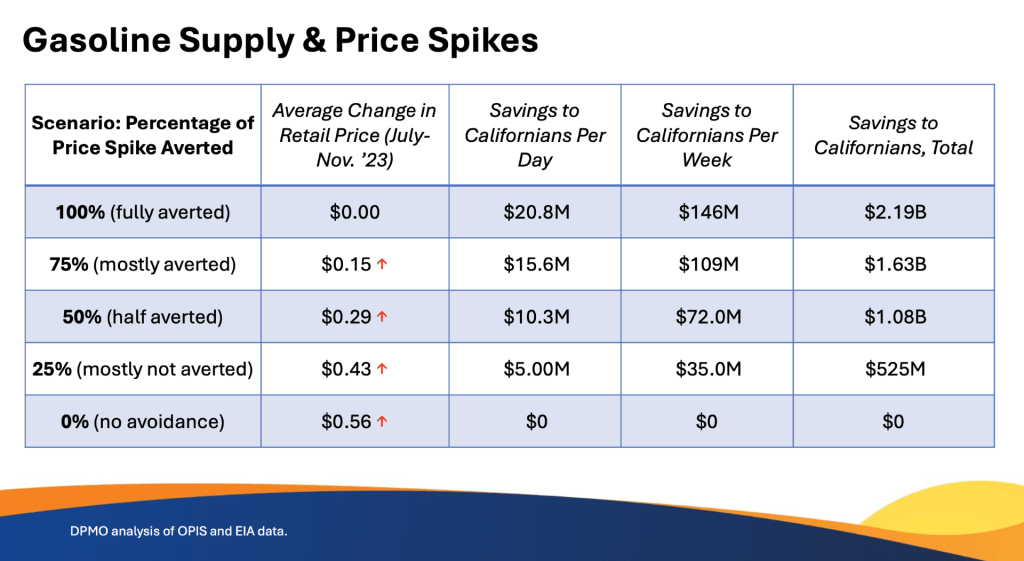
Price spikes at the pump are profit spikes for oil companies, and they’re overwhelmingly caused by refiners not backfilling supplies when they go down for maintenance. If this proposal had been in effect last year, Californians could have saved hundreds of millions — if not billions — of dollars at the pump according to analysis from the Division of Petroleum Market Oversight (DPMO):
Experts have come out in support of this measure, including Stanford economists who praised the proposal for being “an economically sound policy that addresses an important problem in a well-targeted way” and the “additional supply would free up refinery capacity to serve Nevada and Arizona, also reducing prices in these markets.”
Supporters of the bill include mayors, local leaders, consumer organizations, environmental advocates, labor, business leaders and consumer groups. Last month, the Governor and supporters met and discussed how gasoline price spikes affect millions of Californians’ everyday lives, and shared why this plan will help California families.
How CA got here–
The Governor convened a special session to focus on saving Californians money at the pump. The proposal authorizes the California Energy Commission (CEC) to require petroleum refiners to maintain a minimum inventory of refined fuel throughout the distribution chain to avoid supply shortages that create higher prices at the pump for consumers. It also authorizes the CEC to require refiners to plan for resupply during scheduled refiner maintenance.
Following gasoline price spikes in 2022, Governor Newsom called for a special session and worked in partnership with the Legislature to sign into law a package of reforms holding Big Oil accountable.

Elected Officials to Protect America (EOPA) California was at the forefront of effort to ensure the legislation passed in 2022 and helped ensure it’s progress. The photo was taken at an EOPA-CA press conference in Sacramento in 2022. SPEAKERS: Heidi Harmon, former Mayor San Luis Obispo at the mic, Phillip Williams, Councilmember, Yurok Tribe, veteran, to her left, Asm. Alex Lee to his left and Igor Tregub, a Ukraine native, former Berkeley Rent Stabilization Board. Alex Cornell du Houx, fmr. Maine state Representative, Marine combat veteran, and Co-Founder and President of Elected Officials to Protect America to Heidi’s right.
California’s new watchdog found that higher gasoline prices were caused by a suspicious market transaction, refinery maintenance without properly preparing for it, and more.
In January of this year, the watchdog sent Governor Newsom and the legislature a letter outlining specific proposals to reform California’s gasoline spot market, which included a minimum inventory requirement to prevent price spikes due to lack of stable supply.
The state’s gasoline price watchdog also found that, in 2023, gasoline prices spiked largely due to refineries going offline without adequately planning to backfill supplies, which caused refining margins to spike as spot and retail prices jumped — indicating that refinery margins made up the largest proportion of the price spikes between July and September 2023.