

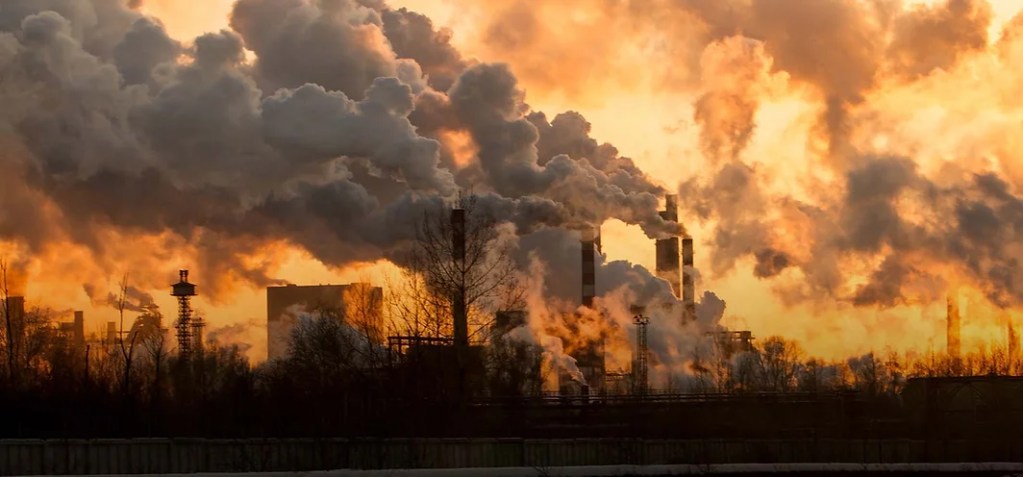
EPA rules to reduce pollution from fossil fuel-fired power plants helps health for millions, especially in environmental justice communities
April 26, 2024
By Ramona Cornell du Houx
Once the 2022 Inflation Reduction Act became law, climate initiatives took off as nearly $370 billion was allocated to help America fight the climate crisis. The momentum needed to energize clean energy manufacturing to significant levels was underway. The 2021 Bipartisan Infrastructure Law also includes billions of dollars to advance climate solutions. But even when the IRA is fully implemented the USA could have fallen short of the needed carbon reductions the UN, and the Paris Accord, recommend to hold back the climate crisis. However, by strengthening pollution standards across the board America would be successful.

More clean energy resources are coming online with incentives from the IRA. The EPA’s rules encourage fossil fuel-fired power plants to transition more to clean energy resources.
The Biden Administration, over the past year, had the Environmental Protection Agency (EPA) strengthen rules for tailpipe emissions from cars and trucks, and methane emissions from oil and gas drilling. While vehicles are the largest source of greenhouse gas emissions, the power sector ranks as the nation’s second-largest contributor of GHGs, and it is a major source of toxic air pollutants tied to various health problems. The power sector emitted 25 percent of overall domestic GHGs in 2022.
On April 25, the EPA announced a suite of final rules to reduce pollution from these fossil fuel-fired power plants in order to slash air pollution, water pollution and planet-warming emissions. As the rules work in tandem with the IRA, the EPA reports it will cut power plant emissions 75 percent relative to 2005 levels by 2035. The EPA rules are designed to improve public health without disrupting the delivery of reliable electricity.
“The Inflation Reduction Act has created 270,000 new clean energy jobs and ignited an American manufacturing renaissance with an unprecedented expansion in clean electricity generation. The EPA’s strengthened rules represent the biggest reductions in carbon pollution America has ever made, and will put the country on the path to zero-out carbon emissions with the IRA. They both advance our public health and environmental justice goals, accelerate the transition to clean energy, and create new economic opportunities,” said Alex Cornell du Houx, former Maine State Representative, Marine combat veteran, and President of Elected Officials to Protect America and Co-Founder. “Once fully implemented, the rules will help us meet our climate goals as we transition to 100 percent renewable energy sources for our electricity.”
Research from the Department of Energy (DOE) and National Renewable Energy Laboratory shows that the sector can meet growing demand for electricity and provide reliable, affordable electricity at the same time as it reduces pollution in accordance with these EPA rules to protect health and the planet.
Currently, natural gas provides about 43 percent of U.S. electricity, with the remainder from nuclear energy and renewables such as wind, solar and hydropower.
“This year, the United States is projected to build more new electric generation than it has in two decades, with 96 percent from clean resources. This is largely due to the Inflation Reduction Act. We are harnessing new technologies to grow our economy, deliver environmental justice, and save the planet for future generations,” said Dominic Frongillo, Executive Director and Co-Founder of Elected Officials to Protect America, former Council Member and Deputy Supervisor of Caroline, New York. “The power plant rule marks the first time the federal government has restricted carbon dioxide emissions from existing coal-fired power plants. EPA is cutting pollution while ensuring that power companies can make smart investments and continue to deliver reliable electricity. This process eases the necessary transition to clean energy sources that the fossil fuel power sector needs to undertake in order to be a part of America’s clean energy economy.”
The suite of final rules includes:
- The rule for existing coal-fired and new natural gas-fired power plants ensures all coal-fired plants control 90 percent of their carbon pollution.
- The rule will reduce releases of mercury and other toxic air pollutants from the smokestacks of coal plants nationwide.
- The rule reduces pollutants discharged through wastewater from coal-fired power plants.
“These rules, finalized under separate authorities including the Clean Air Act, Clean Water Act, and Resource Conservation and Recovery Act, will tangibly reduce climate, air, water, and land pollution spewing from the power sector, helping protect public health, advance environmental justice, and confront the climate crisis. They, along with the IRA, are a part of our Clean Energy Revolution that will be more impactful than the Industrial Revolution, as all people’s rights to life, liberty and the pursuit of happiness will become a reality,” said Paul Evans Oregon State Representative, Air Force Veteran, Elected Officials to Protect America Leadership Council Co-chair.

Fossil fuel power plant rule—
The rule for existing coal-fired and new natural gas-fired power plants ensures all coal-fired plants that plan to run in the long-term, and all new baseload gas-fired plants control 90 percent of their carbon pollution
President Biden is keeping his promise to eliminate carbon pollution from the electricity sector by 2035, while delivering strong public health protections for all communities, with a major focus on overburdened Justice40 communities.
“This bold rule means coal-fired power plants would be forced to capture smokestack emissions or shut down. It will provide hundreds of billions of dollars in climate and health benefits, measured in fewer premature deaths, asthma cases and lost work or school days. That will make a major difference to environmental justice communities who have been suffering in silence for far too long,” said Christion Brock, CEO Elected Officials to Protect America, Air Force Veteran. “The new standards will avoid 1.38 billion metric tons of carbon pollution in our air through 2047, which is the equivalent to the annual emissions of 328 million gas cars. With the Inflation Reduction Act we are already transitioning to electric vehicles that will eventually be powered by offshore wind energy, and other renewables. We have reliable clean energy resources the fossil fuel power plants can transition to. Now it’s time for them to make the change.”
Coal provided about 16 percent of U.S. electricity last year, down from about 45 percent in 2010.
Stronger limits on water pollution from coal power plants—
“Toxic metals from coal plants have been discharging into our rivers, lakes, streams and other waterways for decades. Too many have been afflicted with cancer and dead fish have washed ashore. Limiting the discharge of these metals will return our precious waterways to how nature intended them to be,” said Joel Hicks, Councilmember for the Borough of Carlisle, Pennsylvania, Navy Veteran, EOPA Leadership Council member. “When implemented, this action will annually prevent more than 660 million pounds of pollution per year from being discharged to our nation’s waters. Water is life. The EPA recognizes the reality that we need strong rules to protect what every American needs. With the Inflation Reduction Act we are clearly on the road to a clean energy economy. The incentives are there to help fossil fuel power plants transition to clean energy. We the people want it.”
EPA is strengthening wastewater discharge standards that apply to coal-fired power plants.
“Power plants that burn coal for electricity use large amounts of water. When this water is returned to lakes, streams, it carries pollutants, including mercury, arsenic, selenium, nickel, bromide, chloride, and iodide, and nutrient pollution. Exposure to these pollutants harms our people and ecosystems by contaminating drinking water, recreational waters, and aquatic life,” said Natalie Murdock North Carolina State Senator, D-Durham, EOPA Leadership Council member. “These EPA rules along with the Inflation Reduction Act, supports long awaited economic development, enhances outdoor recreation, and sustains our vibrant ecosystems. No longer will one’s health outcomes rely on one’s zip code. Everyone has a right to breathe clean air and drink clean water and lead productive lives.”
Strengthened mercury and air toxics standards—
According to a Harvard study, nine million people die annually worldwide from breathing in the toxic particulates that fossil fuel companies produce.
It strengthens and updates the Mercury and Air Toxics Standards (MATS) for coal-fired power plants, tightening the emissions standard for toxic metals by 67 percent and finalizing a 70 percent reduction in the emissions standard for mercury from existing lignite-fired sources.
“Exposure to mercury, a powerful neurotoxin, can cause serious health effects, especially for developing fetuses and children. The updated standards address long-standing inequities in exposure to mercury pollution and other heavy metals like arsenic, lead, and chromium. For millions of families and communities across the United States, pollution from fossil fuel power plants has lingered in the air for far too long as a threat to the vulnerable smaller bodies of growing children, adults and our psyches,” said Debbie Sariñana New Mexico State Representative, EOPA NM State Director, Air Force Veteran, former school teacher. “The EPA protections will dramatically cut deadly climate pollution, as tens of thousands of pounds of particle pollution or soot, sulfur dioxide, and smog-forming nitrogen oxide will no longer be released in dangerous quantities. The Inflation Reduction Act works in tandem with EPA’s rules to bring prosperity and health to all Americans.”
The final rule reduces the mercury emissions limit by 70 percent for lignite-fired units and reduces the emissions limit that controls toxic metals by 67 percent for all coal plants, while also requiring the use of continuous emission monitoring systems.

Coal ash spills over in floods invading and polluting local communities and farmlands. Courtesy photo
Protecting communities from coal ash contamination—
The EPA’s final rule expands protections for the communities and ecosystems near active and inactive coal burning power plants, ensuring that groundwater contamination, surface water contamination, fugitive dust, floods and impoundment overflows, and threats to wildlife are all addressed. Coal ash is a byproduct of burning coal in power plants that, without proper management, can pollute waterways, groundwater, drinking water, and the air.
The EPA regulations will require the safe management of coal ash at inactive surface impoundments, at inactive power plants, and historical coal ash disposal areas.
“Comprehensive federal oversight of coal ash, the waste from coal plants that often contains a mix of chemicals linked to increased cancer risk, has been a long time coming. Now it’s here, communities abating coal ash ponds will be able to live without the fear of another storm overflowing this toxic waste from inactive coal ash ponds into their backyards, contaminating the soil it drains into because the rule forces owners to safely close the ponds and clean up contamination,” said Park Cannon Georgia State Representative, EOPA Leadership Council member. “The EPA’s rules, with the Inflation Reduction Act’s investments will transform our environmental justice communities, giving us access to the American Dream.”
Coal ash contains contaminants like mercury, cadmium, chromium, and arsenic which are associated with cancer and various other serious health effects.