

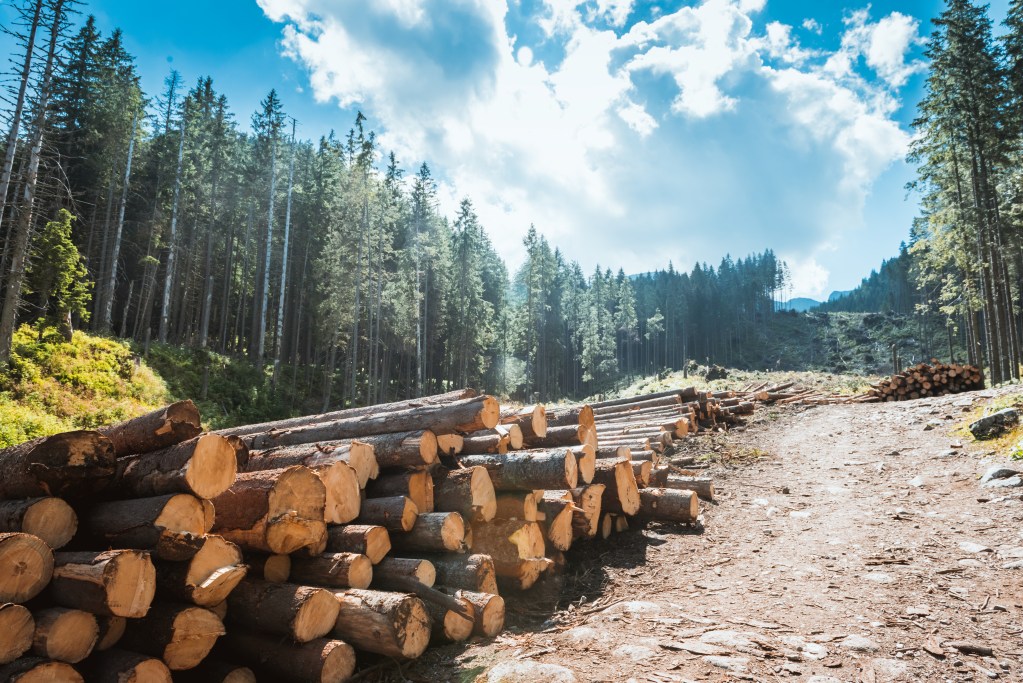
More than 370,000 miles of roads fragment U.S. national forests, with a maintenance backlog in the billions of dollars, according to the Center for Biological Diversity. (Adobe Stock)
Listen to the story here
By Kathryn Carley
Sep 1, 2025
Conservation groups say the proposed removal of the federal Roadless Rule could open pristine areas of New England forests to commercial logging.
The Trump administration has directed agencies to find ways to bypass environmental protections on public lands, to increase timber production by 25%.
Sarah Adloo, executive director of the Old Growth Forest Network, said building roads in unspoiled areas will damage wildlife habitat, important water resources and outdoor recreation.
“With the biodiversity issues and climate crisis,” said Adloo, “we are in no position to be opening up our forests for even more damage on our environment.”
Federal officials say the rule’s removal will help land managers better protect communities from wildfires, but studies show most wildfires ignite within 50 yards of a road. A shortened three-week public comment period on the proposed policy change runs through September 19.
New England forests were some of the first to feel the impacts of commercial logging and many parts are still recovering today. About 260,000 acres within the region’s White Mountain and Green Mountain National Forests gained protection when the Roadless Rule was enacted in 2001.
Adloo said old-growth hemlocks, spruce, and white pines in these areas will be a big draw for timber companies.
“These are in the roadless areas,” said Adloo, “and the character of these areas is truly at risk by bringing them back into the matrix of the timber extraction areas.”
She said conservation groups are encouraging those who care about and spend time in federal forests to submit comments in support of the Roadless Rule.
U.S. Rep. Chellie Pingree, D-ME, is a cosponsor of federal legislation to ensure the rule can’t be undone by a president, but would require an act of Congress.