


Elected officials tour Humboldt port to see and learn how the expansion will help offshore wind power California
April 6, 2025
By Ramona Cornell du Houx
To hold back the devastating impacts of the climate crisis, improve health outcomes and become energy independent from fossil fuels, plans in California are underway to harness electricity from offshore wind.
The scale of the opportunity is huge. A report by Environment California Research & Policy Center and Frontier Group, found that 157 percent of our state’s 2019 electricity usage could be powered by offshore wind alone.
The Humboldt Bay Harbor District was awarded $426.7 million from the Bipartisan Infrastructure Law (BIL) to support development of the “Humboldt Bay Offshore Wind Heavy Lift Marine Terminal Project” at the Redwood Marine Terminal site on the Samoa Peninsula.
“Renewable energy is a promising sector in Humboldt County and I believe we need to continue to have an outspoken commitment to environmentally sustainable, locally-rooted solutions in the face of growing needs. I look forward to continuing to collaborate with scientists and leaders from around the country to uphold our long-term energy resilience,” said Eureka Supervisor Natille Arroyo, US Coast Guard Reserves.
Officials from Elected Officials to Protect America (EOPA) visited Humboldt to learn more about what local leaders are accomplishing with the offshore wind buildout, what concerns there may be, and most of all to congratulate the leadership on their progress to date.
“EOPA is humbled to be here to congratulate everyone involved in this dynamic project on their progress expanding the port and building the first terminal for the deployment of commercial offshore wind turbines on the West Coast. Members of our team are eager and grateful to have the opportunity to tour the port and learn more from local elected officials and stakeholders about the process,” said Meghan Sahli-Wells, Frm. Mayor of Culver City, Elected Officials to Protect America (EOPA) California Director. “We’re at the vanguard of a new clean, renewable energy industry. One that is imperative for the state to meet its clean energy goals. Offshore wind electricity will bring energy security to the state, while improving health outcomes, and the economy.”
EOPA and invited guests toured the harbor by boat and held a stakeholder round table. (photo below. Alex Cornell du Houx – credit all photos)
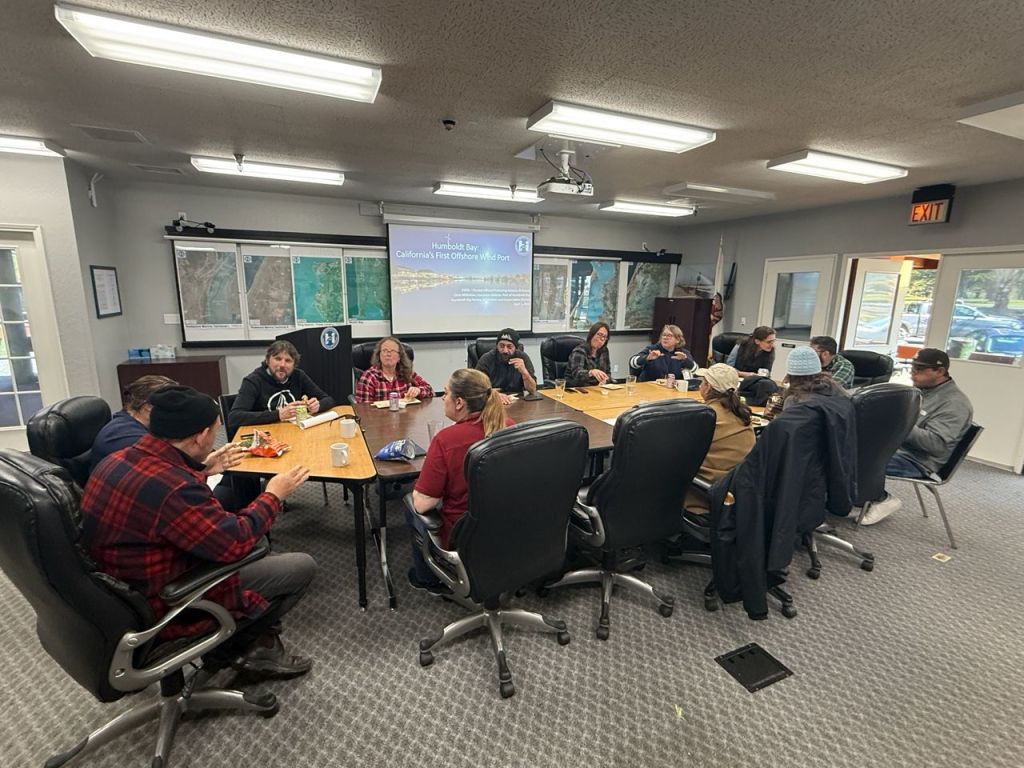
“What has been and will be accomplished in Humboldt Port is an example of strength, dedication and determination to achieve great things for a prosperous healthy future. This project will make Humboldt County a national leader in addressing the climate crisis, sea level rise, and green site development. The needs of local communities are paramount to the success of the project,” said Ben Collings, Frm. Maine State Representative, Elected Officials to Protect America Offshore Wind Advisor. “This is an area of natural beauty where redwoods abound. Combating the climate crisis with clean offshore wind energy will help ensure they will be there for future generations. All these factors are paramount for balanced offshore wind growth, which is the key to economic growth.”
EOPA works to help solve the climate crisis with elected officials from all levels of government. Since 2017 one of their projects has been focused on offshore wind. EOPA California has secured 220 signatures in a letter from elected officials across the state to Governor Newsom to ensure offshore wind happens with an equitable build out.
“I’m glad to be a part of a non-partisan effort committed to the health and safety of our lands and people while exploring opportunities to revitalize our local economy,” said Renee Contreras DeLoach, Eureka Council Member.
Capturing wind energy from giant floating ocean platforms is considered essential to achieving California’s clean energy goal of electrifying its grid with 100 percent zero-carbon energy. With it comes a tremendous opportunity to construct and deploy the turbines as it creates a new industry for the state accompanied by good paying jobs for communities that take part. The ripple effect for surrounding towns should not be underestimated as projects have the potential to revitalize economies.
The California Energy Commission (CEC) strategic offshore wind plan is the roadmap for harnessing wind power from hundreds of giant turbines, floating in the federally leased areas of the ocean about 20 miles off Humboldt Bay, and Morro Bay in waters more than a half-mile deep, far from shore. The CEC plan identifies the large ports of Humboldt, Long Beach and Los Angeles as viable for storing, staging and assembling parts needed for offshore wind operations.
The state’s blueprint envisions offshore wind farms producing 25 gigawatts by 2045, with 5 gigawatts by 2030.
Ongoing port infrastructure will require more funding. Current Assembly Bill 472 would amend the definition of “infrastructure” in the California Infrastructure Planning Act to include offshore wind port infrastructure. The bill would enable the five-year infrastructure plan to include, starting in the 2027–28 fiscal year, an assessment of funding needs for port infrastructure for offshore wind energy development.
“Offshore wind has the potential to transform the economy of the North Coast and create access to a new renewable energy source,” said Assembly Member Chris Rogers, about his bill when he announced it in February. “Responsible, integrated planning for offshore wind energy facilities is key to their success. AB 472 will ensure offshore wind ports are included in California’s infrastructure planning so we can meet our state’s cleaner energy goals and create jobs locally.”
Port readiness studies published by the Bureau of Ocean Energy Management (BOEM), the California State Lands, and the National Renewable Energy Lab concur that a Staging & Integration port terminal project in Humboldt Bay is critical to the ultimate success of achieving state renewable energy goals.While floating offshore wind turbines are new to the United States, the technology has been refined in northern Europe.