

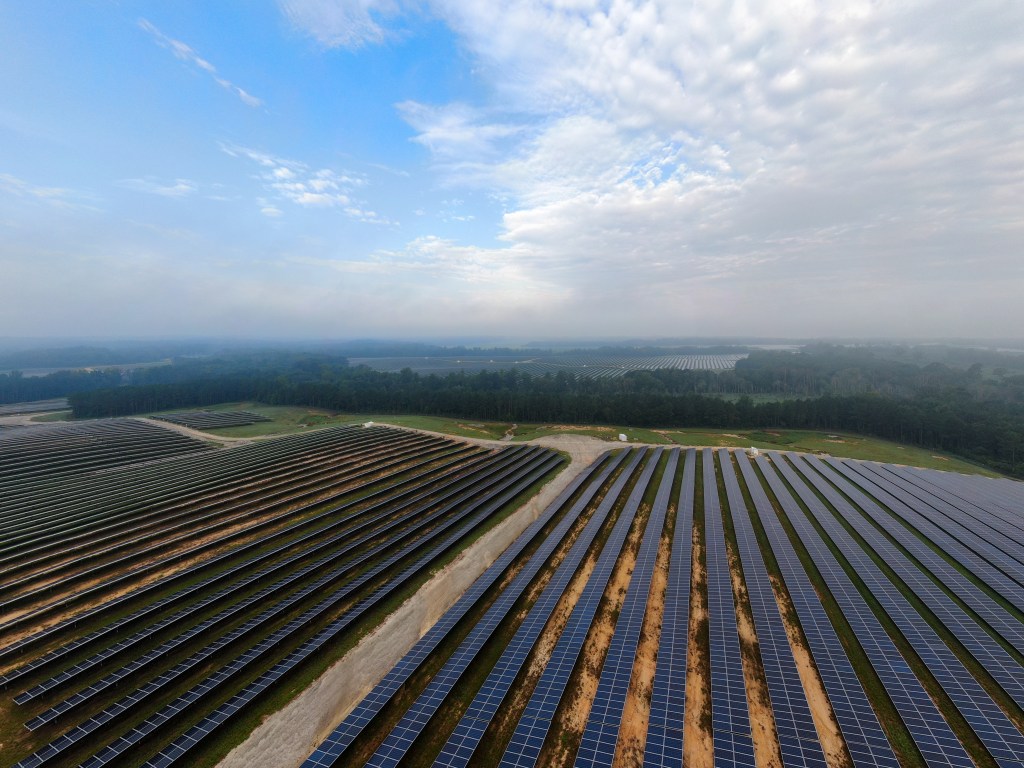
Clean energy will take a hit under a new law allowing Duke Energy to delay carbon pollution reduction goals. (Mathew/Adobe Stock)
Listen to the story HERE
Aug 17, 2025
By Eric tegethoff
A new energy law that North Carolina passed despite Gov. Josh Stein’s veto could make the state less attractive to businesses, according to environmental advocates.
The General Assembly overrode Stein’s veto of Senate Bill 266, which eliminates Duke Energy’s goal to cut carbon pollution 70% by 2030. The state’s goal to become carbon neutral by 2050 remains intact.
Southeast Advocate for Environmental Entrepreneurs, Zach Amittay, said the bill is likely to drive away business.
He noted that large corporations often have clean energy commitments, and one of the distinguishing factors for North Carolina among other states in the South is its carbon reduction goals.
“Now there’s a lot less certainty exactly what the energy mix is going to look like in North Carolina,” said Amittay, “which likely means that corporates are going to have to think twice when it comes to making investments in North Carolina – whether or not the grid, as it exists, will be able to rely on it to meet their clean energy goals.”
Supporters of the new law say it gives Duke Energy more room to build gas and nuclear power plants in the state, which could reduce costs for ratepayers.
However, a study from North Carolina State University finds Senate Bill 266 could cost ratepayers up to $23 billion through 2050, because of higher costs for fossil fuels.
Amittay said the bill also creates an uncertain future for renewable energy jobs in the state.
“The expectation was that the number would continue to grow robustly,” said Amittay. “It has over the past many years, far outpacing overall job growth across the North Carolina economy. So this sort of shift in the power sector dynamics threatens that continued job growth, for sure.”
Amittay noted that costs continue to drop for renewable energy, keeping it competitive despite headwinds on the federal level and in many states. However, he said North Carolina is now among the states where barriers to clean energy are increasing.
“From our perspective, this bill was a reflection of Duke’s interests,” said Amittay, “rather than ratepayer interests and the interests of the broader energy economy in North Carolina, specifically the clean energy ecosystem.”