

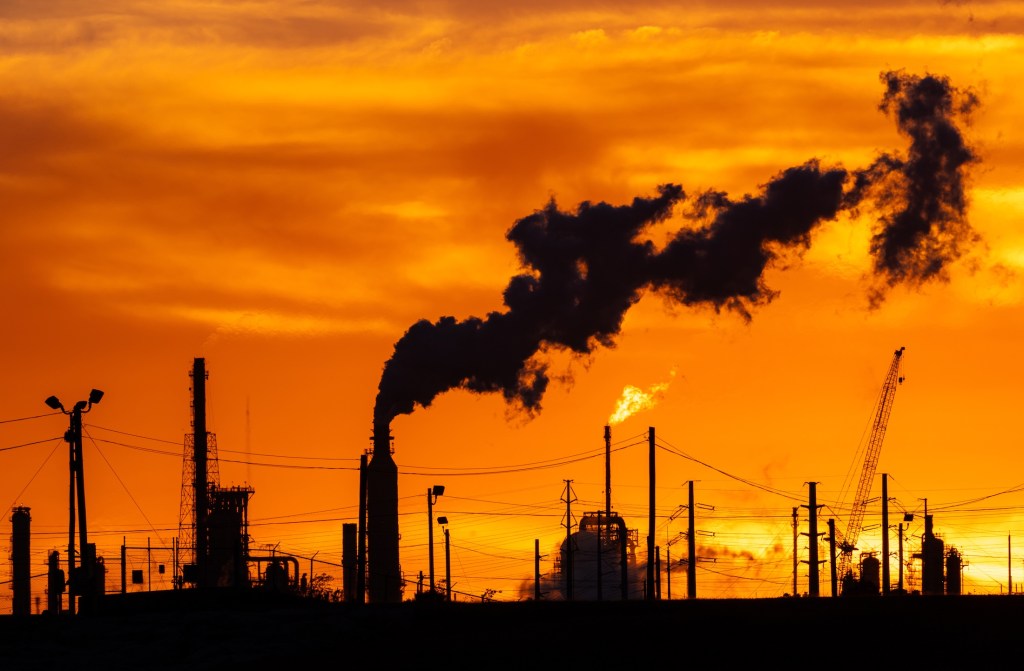
According to a U.S. Senate Budget Committee report, the fossil-fuel industry has engaged in public relations campaigns of denial, disinformation and doublespeak about the impacts of burning fossil fuels on climate since the 1960s. (Adobe Stock)
Listen to the story HERE
January 7, 2026
By Eric Galatas
Many banks, financial firms and insurance companies have made bold public commitments to do their part to rein in climate change. But the Pulitzer Center for Investigative Reporting has revealed that those same companies are financing the search for new sources of fossil fuels and new infrastructure to burn them.
According to global scientific consensus, tapping any new oil and gas reserves will likely produce catastrophic outcomes.
Josephine Moulds, a reporter with the Bureau of Investigative Journalism, said there’s enough oil and gas already in the pipeline to fuel a clean-energy transition.
“We’ve got enough, in terms of the projects that we’ve already got running – we’ve got enough to keep us going,” she said, “as long as we shift over to solar and wind and all of the other renewables.”
Companies continue to promote their climate commitments, and argue that if they didn’t do business with corporations searching for new places to drill, they wouldn’t be able to work with any existing oil and gas company. President Donald Trump has called climate change a hoax, and has put the brakes on U.S. efforts to transition to clean energy. The administration is also making good on campaign promises to ramp up oil and gas production, and has laid claim to the world’s largest oil reserves in Venezuela.
According to a 2024 Joint Senate committee report, the oil and gas industry has known about the impacts of burning fossil fuels on climate since at least 1959, and has engaged in a public-relations campaigns of denial, disinformation and doublespeak for the past six decades.
Moulds noted that the impacts of a warming planet are already being felt.
“People living near coal-fired power plants, or where fracking has happened, or even the people affected by wildfires,” she said. “These are huge impacts on our daily lives.”
After Moulds’ reporting exposed backroom dealing and preferential treatment on plans to extract oil and gas from the world’s last rainforest that stores more carbon than it emits, the Democratic Republic of Congo scrapped a major leasing auction.
This story was based on original reporting from Josephine Moulds for the Pulitzer Center.