

Listen to the story HERE
By Suzanne Potter
November 30, 2023
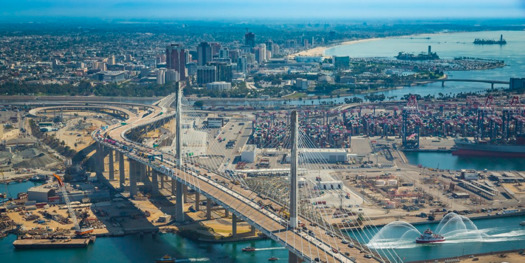
As world leaders gather in Dubai for the international conference on climate change, the City of Long Beach is acting on multiple fronts to help the U.S. lower carbon emissions.
The city’s Climate Action Plan looks to reduce pollution from shipping, trucking, and public transportation. Mayor Rex Richardson said the idea is to improve air quality and spur the green economy.
“We’re on track to have 100% zero-emission cargo handling equipment by 2035,” said Richardson. “We’re investing in infrastructure for charging for clean trucks, and we’re investing in subsidies to help small truckers transition to zero-emission vehicles.”
Advocates are pressing the Environmental Protection Agency to adopt strict rules for heavy-duty vehicle emissions by early next year.
Meanwhile, Long Beach’s Clean Trucks program is phasing out polluting diesel trucks and the city is now home to the state’s first heavy-duty electric vehicle charging port.
Another project aims to let ships plug in right when they dock to avoid idling.
The federal government just announced plans to build a hydrogen hub in the city. And plans are in motion to start manufacturing offshore wind turbines at a special pier at the port.
Tonya Calhoun, PhD – director of community engagement at the Environmental Defense Fund – praised the mayor’s West Side Promise program, which aims to improve the quality of life in lower-income neighborhoods where life expectancy is 14 years lower than in wealthier areas.
“These frontline communities experience firsthand the fundamental intersections between climate change and poverty and economic opportunity and human health and quality of life,” said Calhoun. “And so the community came together and said we want to be more resilient and this is how we want it to be done. We want to be part of the solution.”
The city is also working to reduce drilling and wean itself off oil revenue, improve energy efficiency in homes and buildings, electrify the city’s vehicle fleet, replenish sand at the beaches to guard against sea level rise, and plant more shade trees so people can use less air conditioning and save energy.